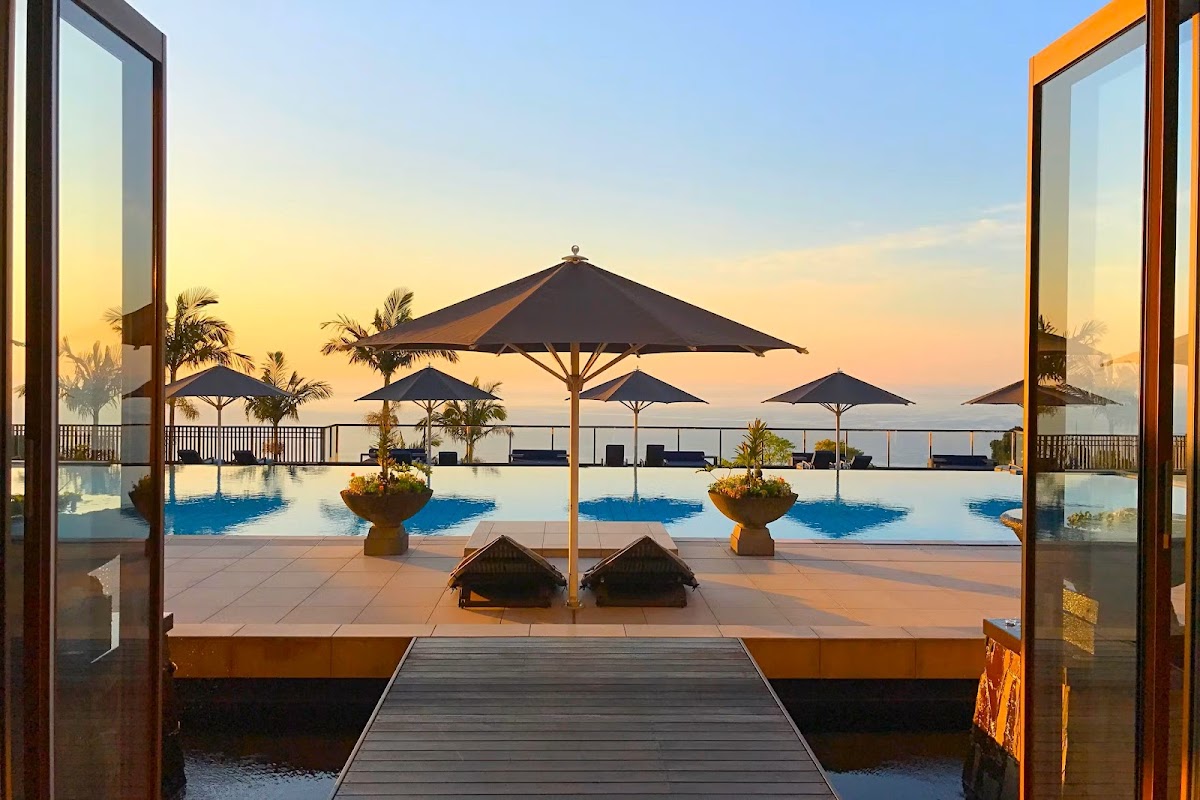
Japan is a country shaped by volcanoes, compressed between tectonic plates, stretched across 3,000 kilometers of latitude from subarctic Hokkaido to subtropical Okinawa. Within this relatively small landmass, you find primeval cedar forests older than Rome, alpine ranges that rival the Swiss Alps, volcanic hot springs numbering over 27,000, and coastlines where coral reefs meet temperate forests. For a nation famous for its cities, Japan is overwhelmingly a country of nature: 67% of the land is covered in forest.
This guide is for travelers who want to experience that natural Japan, not as a day trip from Tokyo, but as the purpose of the journey itself. We cover the best nature retreats across every region, help you choose the right season, and recommend specific properties where the architecture, cuisine, and setting work together to create something worth traveling for.
What Makes Japan's Nature Retreats Different
The Japanese approach to nature accommodation differs fundamentally from the Western resort model. Where a Western lodge might position itself as a base camp for activities, a Japanese nature retreat treats the stay itself as the experience. The architecture frames specific views. The cuisine reflects the surrounding landscape through seasonal, local ingredients. The bathing culture, whether onsen or forest bath, creates a physical connection to the environment that goes beyond simply looking at it.
This philosophy has a name: shizen to no kyosei, or coexistence with nature. You see it in the way Zaborin in Niseko positions floor-to-ceiling windows to frame birch forest through every season. You see it in how Satoyama Jujo in Niigata preserves a 150-year-old building while opening it to views of terraced rice paddies and mountains. You see it in the way temple stays on Mt. Koya wake guests with morning meditation surrounded by ancient cedar.
Nature Retreats by Region
Hokkaido: Wilderness and Volcanic Landscape
Hokkaido is Japan's frontier. The northernmost main island has the country's largest national parks, its most abundant wildlife, and landscapes that shift from lavender fields to volcanic craters to drift ice coastlines. Nature retreats here tend toward dramatic settings and year-round appeal.
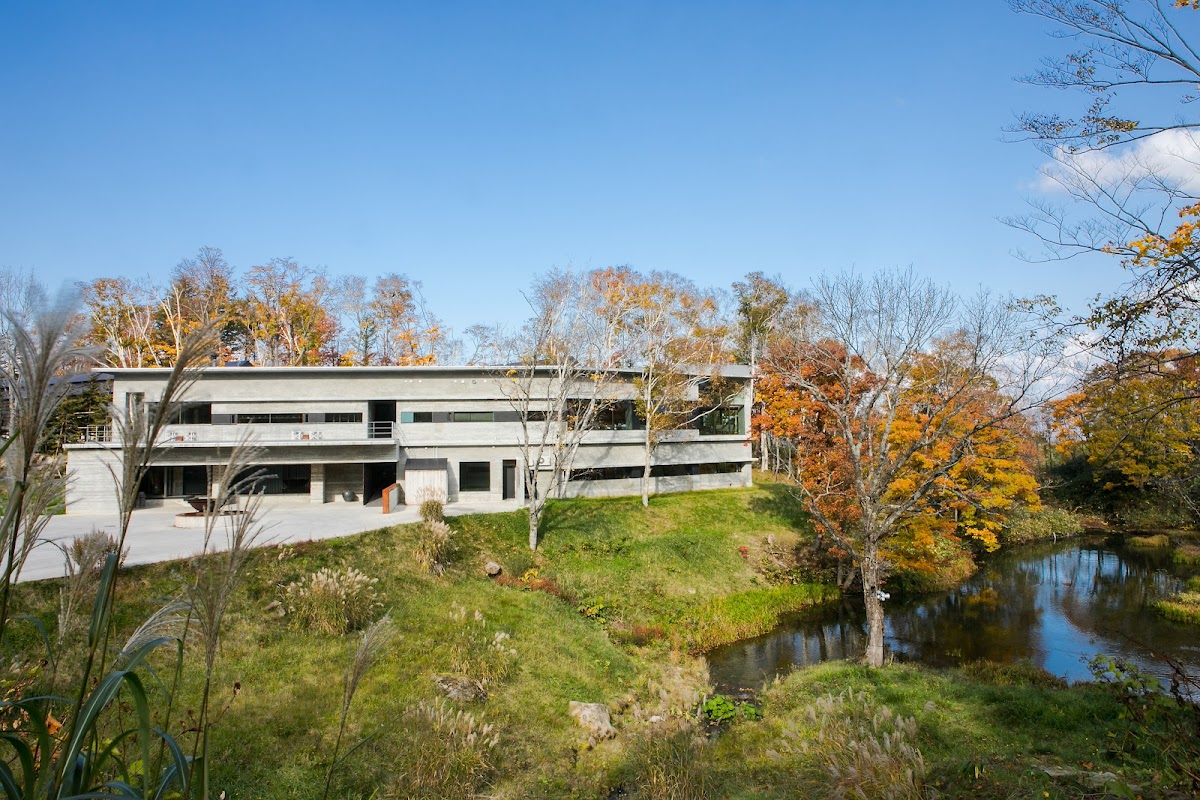
Fifteen private villas in birch forest, each with indoor and outdoor onsen baths. Nakayama Architects designed the property to dissolve boundaries between interior and landscape. The kaiseki cuisine draws on Hokkaido's legendary seafood and produce. Michelin 2 Keys.
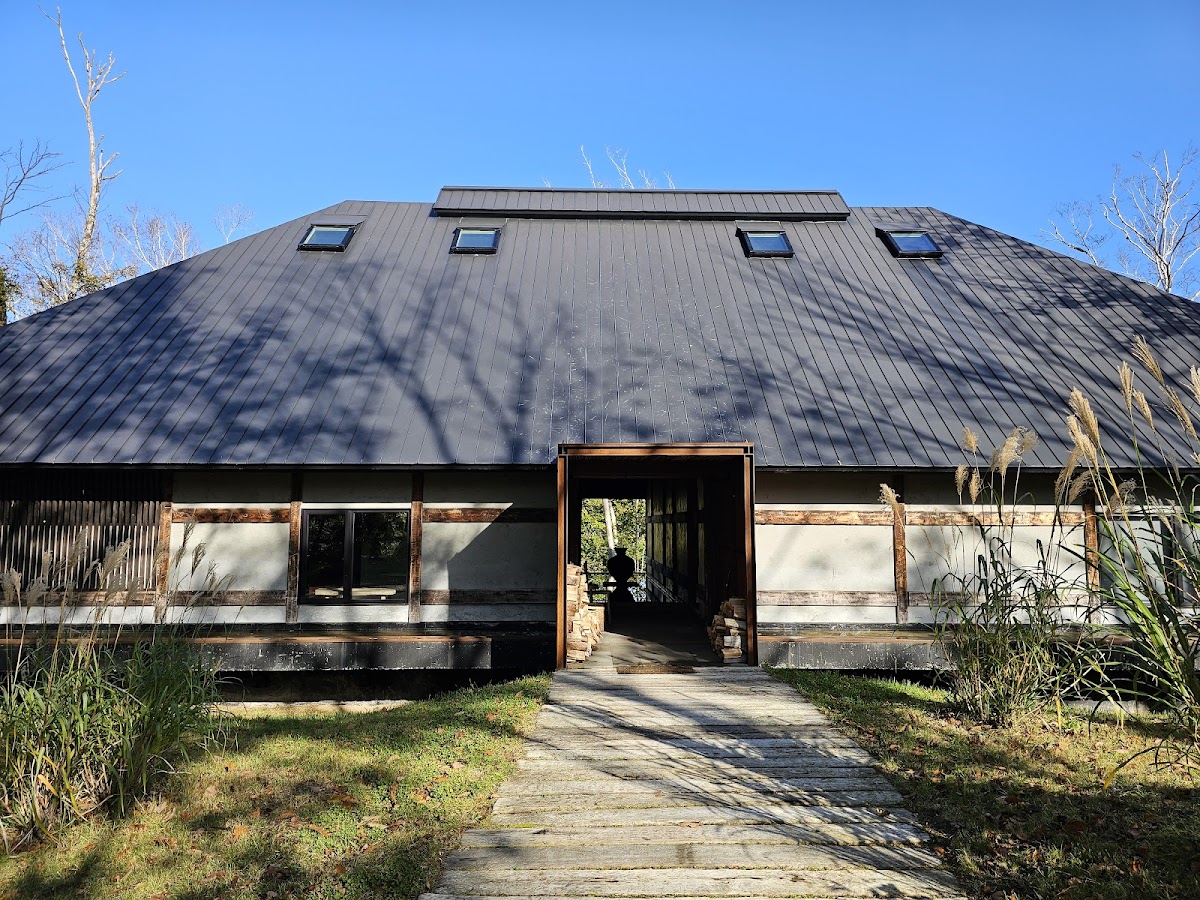
A reclaimed-timber retreat where Ainu-inspired architecture connects guests to Niseko's natural landscape. The building materials themselves tell the story of the region's forests, and the onsen draws from local hot spring sources.
For wildlife encounters, Kitakobushi Shiretoko on the UNESCO-listed Shiretoko Peninsula offers aurora-viewing onsen and brown bear territory just outside. Akan Tsuruga Besso Hinanoza sits on the shore of Lake Akan in a national park where red-crowned cranes winter and Ainu culture remains a living tradition.
Tohoku: Deep Mountain Onsen
Japan's northeast is where onsen culture reaches its most primal form. Mountain valleys hold hot spring villages that have changed little in centuries, and winter brings snow depths measured in meters rather than centimeters.
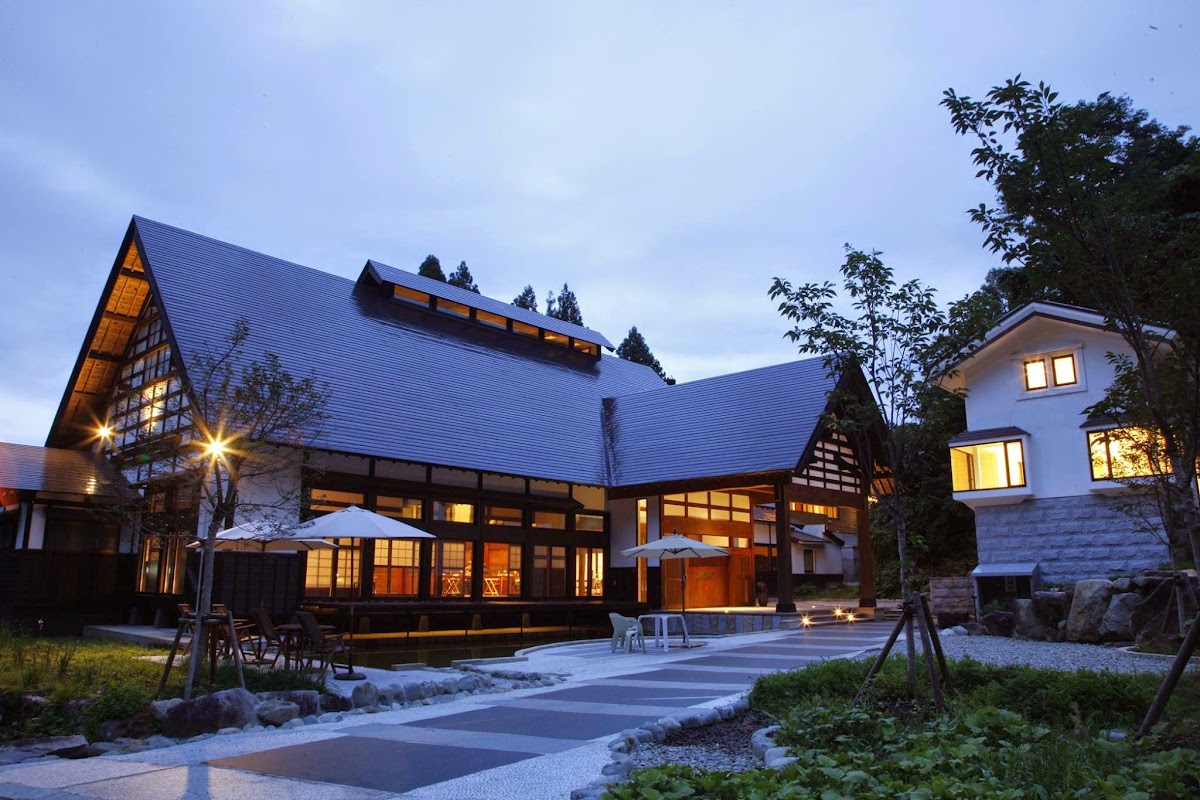
Three hundred years of operation in the mountains of Akita. The milky white outdoor bath surrounded by thatched-roof buildings and snow is one of Japan's most iconic scenes. Oil lamps light the evening. Meals are cooked over an irori hearth.
Aoni Onsen in Aomori takes remoteness further: it has no electricity, lit entirely by oil lamps, making it the ultimate digital detox. Sukayu Onsen at the base of Hakkoda has a legendary 1,000-person cypress bath in a beech forest setting. For contemporary design in deep snow country, Satoyama Jujo in Niigata proves that heritage architecture and modern art coexist beautifully.
Japanese Alps and Central Highlands
The mountain ranges running through Nagano, Gifu, and Toyama contain Japan's most dramatic alpine scenery. Kamikochi, the Tateyama Alpine Route, and the Kiso Valley attract hikers, but the accommodation options transform a mountain visit into something deeper than a day hike.
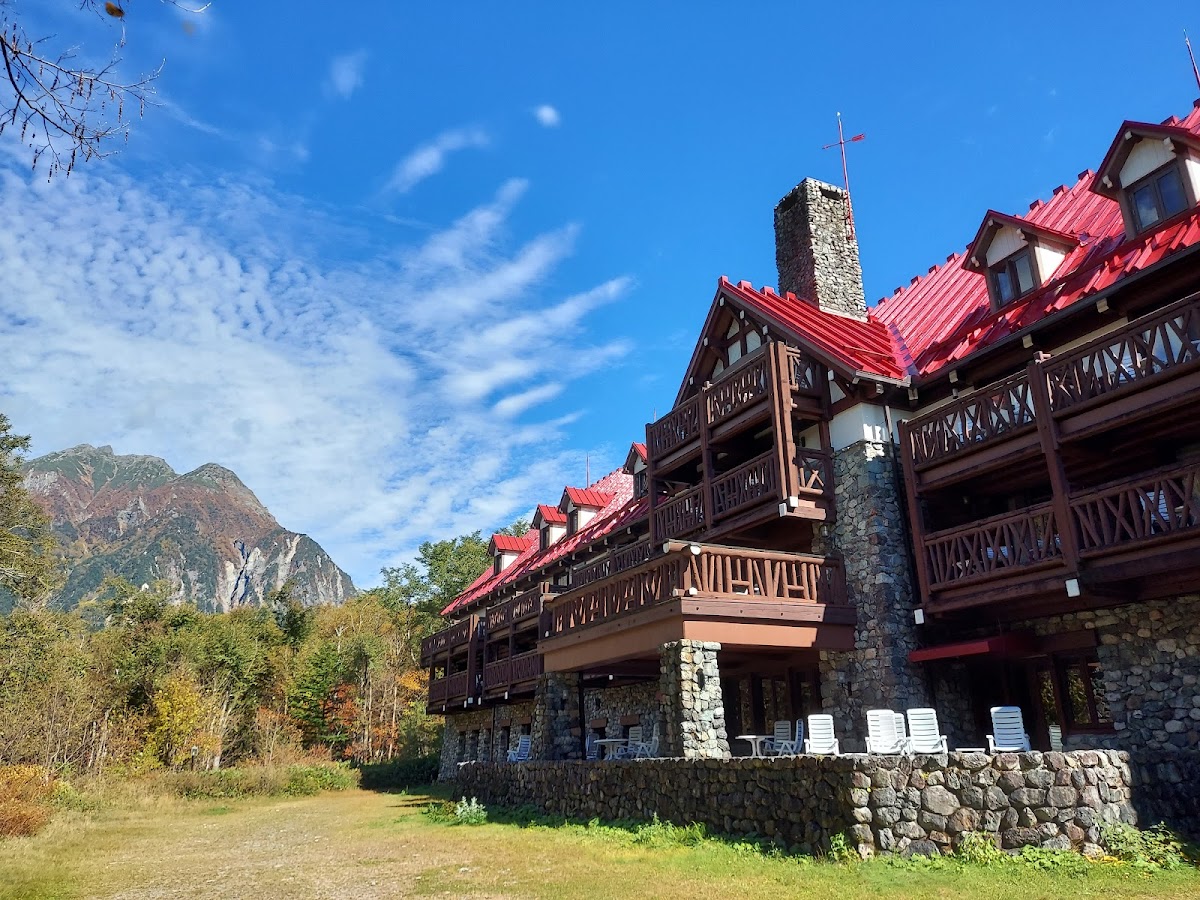
A classic 1933 mountain lodge inside Chubu Sangaku National Park. The Hotaka Range towers above, the Azusa River runs clear below, and the hotel maintains an atmosphere of timeless mountain hospitality that few properties in Japan can match.
At an extraordinary 2,410 meters, Mikuriga-ike Onsen in Toyama is Japan's highest-altitude hot spring, perched beside a crater lake on the Tateyama Alpine Route. In the lower valleys, Hoshi Onsen Chojukan in Gunma is a 140-year-old national cultural property where the wooden bathhouse alone is worth the journey.
Kii Peninsula: Sacred Forests and Pilgrimage
The Kii Peninsula in Wakayama and Mie prefectures holds Japan's most spiritually resonant landscapes. The Kumano Kodo pilgrimage trails wind through forests that have been sacred for over a thousand years, and the accommodation along these routes ranges from temple stays to luxury onsen.
Koyasan Eko-in offers authentic temple lodging with morning meditation, night cemetery walks, and vegetarian shojin ryori cuisine on sacred Mt. Koya. Yunomine Onsen Adumaya is a UNESCO World Heritage onsen ryokan on the Kumano Kodo with 1,800 years of history. For modern luxury in this ancient landscape, Amanemu in Ise-Shima National Park combines Aman's minimalist design with natural onsen.
Kyushu: Volcanic Hot Springs and Subtropical Forest
Kyushu is Japan's hot spring heartland. The island has more active volcanic areas than any other region, and the thermal energy produces an astonishing variety of onsen types, from mud baths in Beppu to sand baths in Ibusuki to bamboo-forest baths in Kurokawa.
An all-suite bamboo forest ryokan surrounded by 50,000 bamboo trees, each villa with its own private onsen bath. The setting is extraordinary: dense bamboo in every direction, hot spring steam rising through the canopy, and a silence broken only by wind through the stalks.
Kurokawa Onsen Oyado Noshiyu offers thatched-roof charm in Kumamoto's famous onsen village. On the island of Yakushima, Sankara Hotel & Spa provides luxury between ancient cedar forests and the sea, while Kyukamura Yakushima offers a more accessible base for cedar forest trekking.
Okinawa and the Subtropical Islands
Japan's southern islands offer a completely different nature experience: mangrove forests, coral reefs, and subtropical jungle. The accommodations here range from luxury beach resorts to treehouses embedded in UNESCO-listed rainforest.
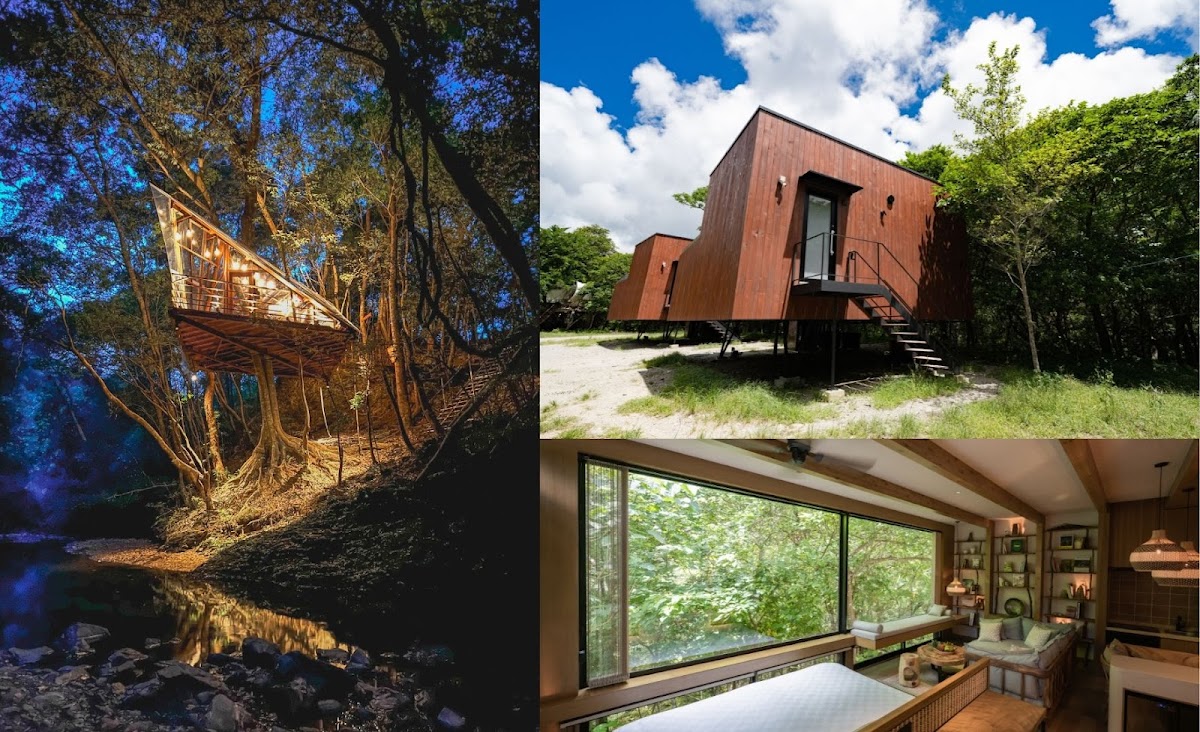
Carbon-negative treehouses in Yanbaru UNESCO rainforest. These structures allow native wildlife to pass underneath, minimizing environmental impact while placing you directly in the forest canopy with birds and subtropical species you will not find anywhere else in Japan.
Hotel Nirakanai Iriomote on subtropical Iriomote Island offers mangrove kayaking and jungle exploration. Hoshinomeguri no Yado on Taketomi Island provides traditional Okinawan stone-wall villas on a coral island with star-sand beaches.
Choosing the Right Season
Spring (March-May): Cherry blossoms move north from Kyushu to Hokkaido over six weeks. Mountain retreats emerge from winter, trails open, and the landscape shifts from bare branches to electric green almost overnight. Best for: Kii Peninsula, Shikoku, Japanese Alps (late spring).
Summer (June-August): Mountains are lush and trails are at their best. Hokkaido avoids the humidity that blankets the rest of Japan. Okinawa's rainy season ends by late June, opening clear water and coral reefs. Rates drop at mainland properties, making summer excellent value. Best for: Hokkaido, Okinawa, high-altitude mountain lodges.
Autumn (October-November): Japan's most visually spectacular season. Foliage moves south from Hokkaido, reaching central Honshu by late October and Kyushu by November. Mountain retreats and onsen ryokan are at peak demand. Book months ahead. Best for: Tohoku, Japanese Alps, Nikko, Hakone.
Winter (December-February): Snow transforms mountain onsen into scenes of extraordinary beauty. Hokkaido and Tohoku receive the world's heaviest snowfall. The contrast between freezing air and steaming outdoor baths is unmatchable. Best for: Niseko, Nyuto Onsen, snow country in Niigata, Zao.
Types of Nature Retreats
Traditional Ryokan
The classic Japanese nature retreat. Tatami rooms, futon bedding, kaiseki cuisine that changes with the seasons, and often onsen baths fed by natural hot springs. The best ryokan are works of art in hospitality, where every detail from the flower arrangement to the serving dish reflects the current season. See our complete guide to onsen ryokan.
Design Hotels in Nature
A growing category that pairs contemporary architecture with natural settings. Satoyama Jujo blends a 150-year-old building with contemporary art in snow country. Ento perches minimalist rooms on a cliff above the ancient caldera of the Oki Islands. Shiroiya Hotel reimagines a 300-year-old inn with contributions from premier architects and artists. For more, see our guide to art and design hotels in natural settings.
Cabins and Villas
Private standalone structures offering independence and space. SANU 2nd Home Karuizawa places architect-designed cabins in forest with floor-to-ceiling windows. Andaru Collection Niseko limits its birch-forest estate to just six groups per day. Read our cabin stays guide for the full range.
Temple Stays
Japan's Buddhist temples, particularly on Mt. Koya and Fukuchiin, offer overnight stays with morning prayer, meditation, and vegetarian cuisine. The temple grounds are themselves forest retreats, often surrounded by centuries-old cedar trees.
Practical Planning Tips
How to Book
Many nature retreats can be booked through international platforms, but some premium ryokan only accept reservations through their own websites (often Japanese-only) or travel agents. For remote properties, booking directly or through a Japan-specialist agency ensures accurate communication about dietary needs, arrival times, and transport arrangements. Browse all our curated properties on the search page.
Getting There
The Japan Rail Pass covers bullet trains and many regional lines, making it the backbone of nature retreat travel. However, the most memorable properties are often beyond the last train station. Rental cars are essential for exploring Hokkaido, parts of Tohoku, rural Kyushu, and mountain areas. Some retreats provide shuttle services from the nearest station.
What to Expect at Check-In
Japanese nature retreats typically have early check-in deadlines, often 3:00-4:00 PM, because dinner is part of the experience and the kitchen begins preparing kaiseki hours in advance. Check-out is usually 10:00-11:00 AM. Arriving on time is not just polite; it ensures you get the full experience the property has designed for you.
Budget Planning
Ryokan rates almost always include dinner and breakfast, which can represent $100-200 of value per person. A $400/night ryokan that includes two meals is comparable to a $250 hotel plus two restaurant dinners. Factor this into your comparisons.
Frequently Asked Questions
A nature retreat in Japan is any accommodation designed to immerse guests in the natural environment. This ranges from traditional ryokan with forest or mountain settings, to modern eco-lodges, treehouses, and architect-designed cabins. The common thread is a deliberate connection to the landscape through architecture, cuisine, and activities.
Each season offers a distinct experience. Spring brings cherry blossoms, summer offers lush mountain hiking, autumn delivers spectacular foliage, and winter provides snow-covered onsen. The best time depends on your preferred region: Hokkaido shines in summer and winter, Tohoku in autumn and winter, Okinawa in spring and early summer.
Budget nature stays start around $80-150 per night. Mid-range properties with onsen and meals run $200-400. Premium retreats cost $500-1,500+ per night. Remember that most ryokan include dinner and breakfast, which significantly changes the value calculation compared to Western hotels.
Most mid-range and luxury retreats have some English-speaking staff. Properties in popular areas like Niseko, Hakone, and Kyoto typically offer full English service. Remote properties may have limited English, but hospitality transcends language, and translation apps bridge any remaining gaps.
For more focused guides, explore our articles on forest hotels, off-the-beaten-path stays, countryside accommodation, and hidden onsen ryokan. Or browse all curated nature stays on our interactive map.