Japan has a unique relationship between architecture, art, and landscape. The best Japanese buildings do not impose themselves on nature; they frame it, channel it, and dissolve into it. This philosophy, visible in everything from temple design to the minimalist aesthetics of modern architecture, has produced a category of hotel that exists nowhere else: accommodation where the building is as much the destination as the location, and both serve the natural setting.
These are not hotels that happen to have art in the lobby. They are properties where architecture, art, and landscape form a single integrated experience. Some are designed by globally recognized architects. Others have been shaped over centuries by anonymous craftspeople. All share a commitment to the idea that where you sleep should elevate how you see the world outside the window.
The Art Islands
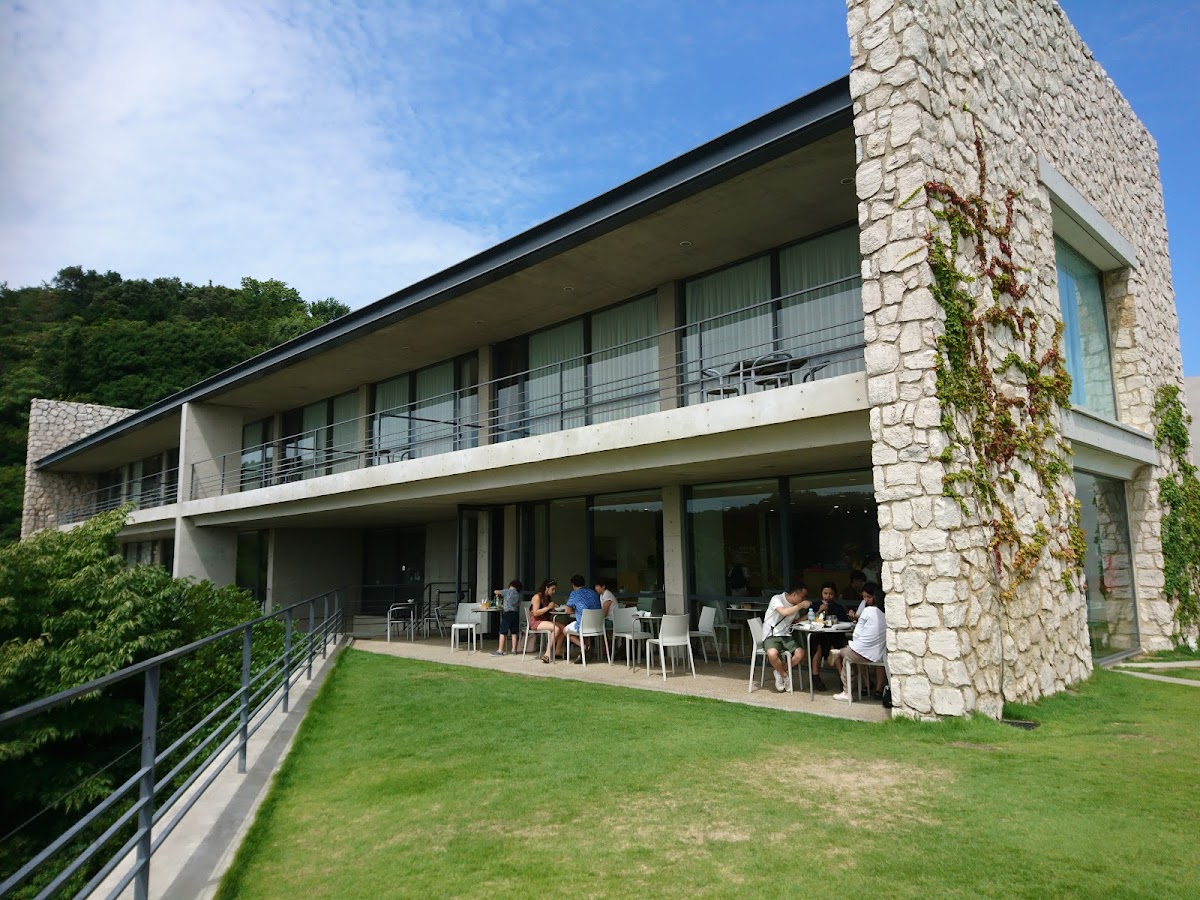
Benesse House (Naoshima, Kagawa)
Stay inside a Tadao Ando art museum on the world-renowned art island. Four unique buildings, Museum, Oval, Park, and Beach, offer different relationships between art, architecture, and the Seto Inland Sea. The Museum building lets you wander among the artworks at night after day visitors leave. The Oval, accessible only by monorail, perches on a hilltop with six rooms arranged around an elliptical water garden.
Naoshima is the epicenter of Japan's art-in-nature movement. Beyond Benesse House, the island holds the Chichu Art Museum (Monet's Water Lilies in natural light underground), the Lee Ufan Museum, and site-specific installations scattered through fishing villages and beaches. The Seto Inland Sea's gentle climate and island-scattered seascape provide the canvas for all of it.
Luxury art ryokan with private en-suite onsen overlooking forest and rock garden. A more intimate alternative to Benesse House, Roka combines traditional ryokan hospitality with the island's contemporary art context. The private onsen is a rare luxury on Naoshima.
The Architect Hotels
Suiden Terrasse (Yamagata) - Shigeru Ban
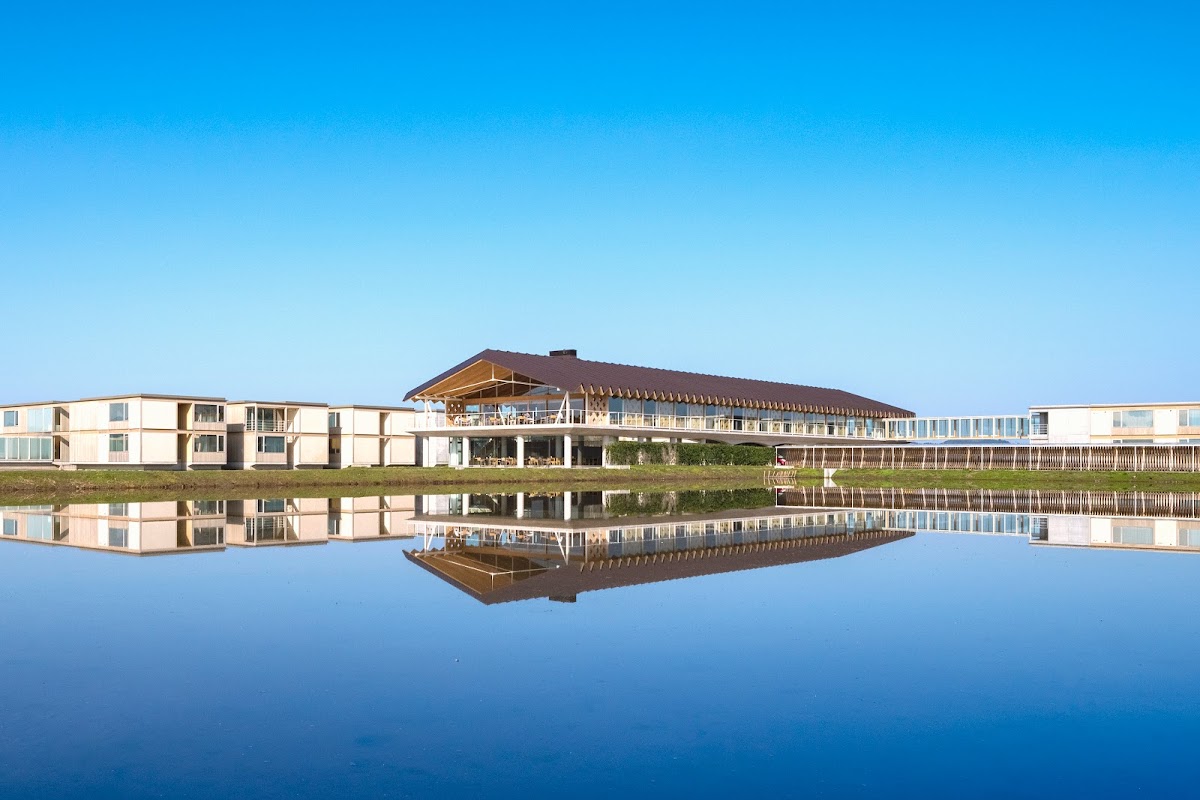
Pritzker Prize-winning architect Shigeru Ban designed this hotel to float above rice paddies facing the sacred Dewa Sanzan mountains. The timber-frame structure reflects in the flooded paddies, creating a mirror effect that changes with the rice growing cycle: water mirrors in spring, green in summer, gold in autumn, white in winter. The architectural concept is inseparable from the agricultural landscape.
Banyan Tree Higashiyama Kyoto - Kengo Kuma
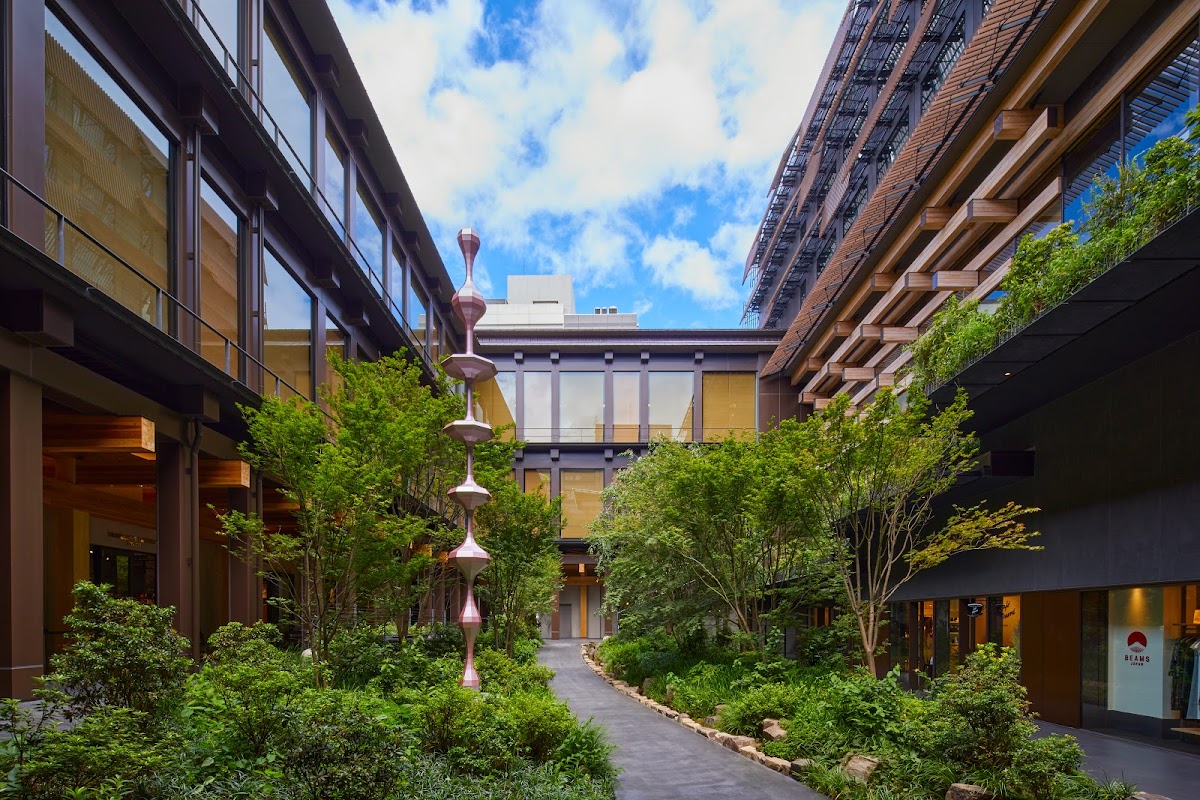
Kengo Kuma designed this resort in bamboo forests with a reimagined Noh theatre and craft workshops. The architecture dissolves into the Higashiyama hillside using Kuma's signature approach of layered natural materials, wood, bamboo, and stone, that blur the boundary between building and forest.
Fujiya Ryokan, Ginzan Onsen - Kengo Kuma
Kengo Kuma's renovation of a traditional ryokan in the photogenic Ginzan Onsen streetscape. The bamboo lattice facade glows warmly at night against the snow, creating one of the most memorable architectural images in contemporary Japan. The interior spaces use Kuma's characteristic layered-wood screens to control light and views.
Miyazaki Garden Terrace - Kengo Kuma
Bamboo-wrapped resort hotel on a forested hillside overlooking the Pacific, designed by Kengo Kuma. The bamboo lattice exterior creates a dialogue between the building and the surrounding forest, filtering light and air through natural materials in a way that makes the boundary between architecture and nature genuinely ambiguous.
The Heritage Reimagined
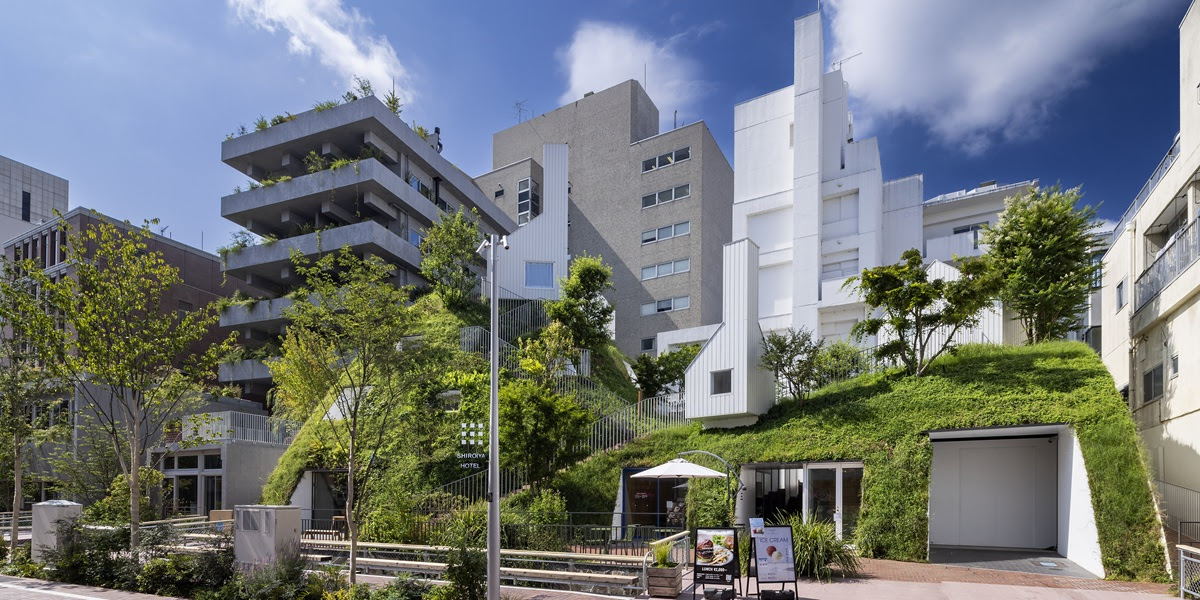
Shiroiya Hotel (Gunma)
A 300-year-old ryokan reborn as a cutting-edge design hotel. The Heritage Tower preserves the original structure while artists and architects have contributed rooms and spaces that range from raw concrete minimalism to immersive light installations. The Green Tower adds Sou Fujimoto's contribution. In a quiet city two hours from Tokyo, Shiroiya proves that great architecture can revitalize any location.
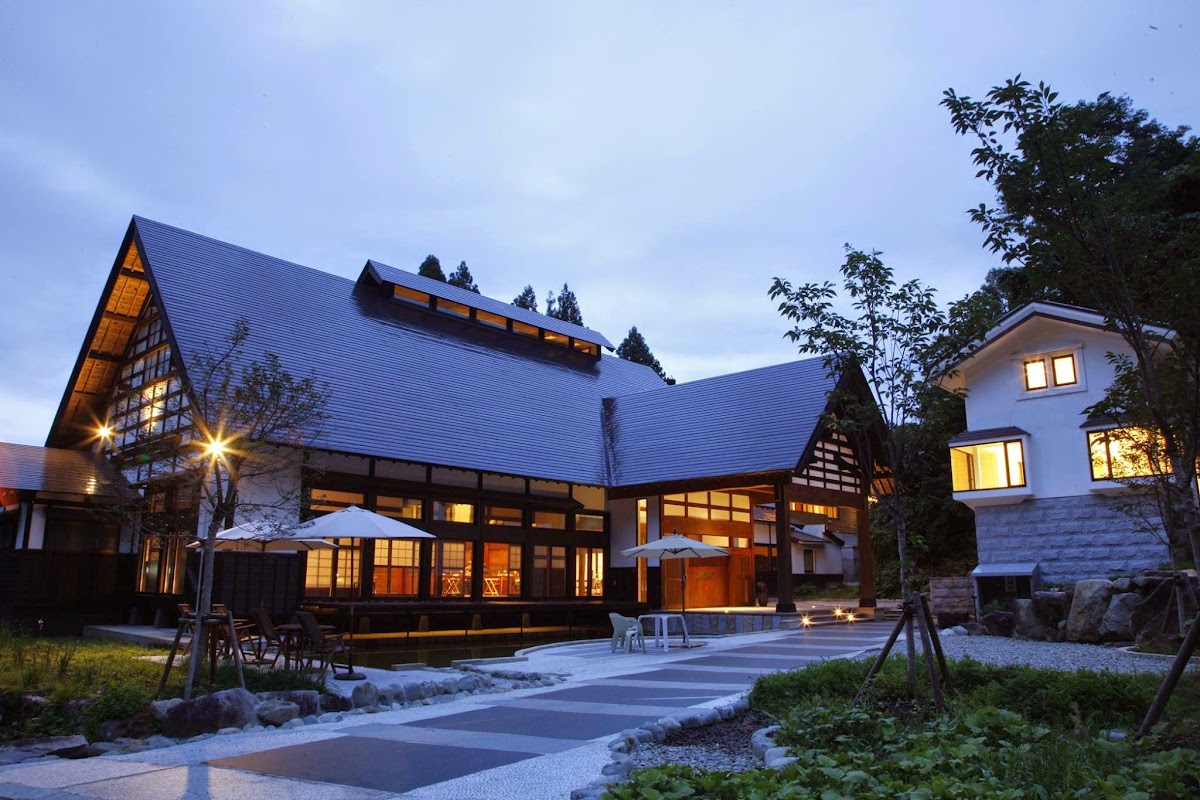
Satoyama Jujo (Niigata)
A 150-year-old building blending heavy-timber mountain architecture with contemporary art in Japan's deepest snow country. Michelin 1 Key. The ten rooms each approach the dialogue between old and new differently. The restaurant serves rice grown in the paddies visible from the dining room. The onsen looks across the valley to mountains that hold 3-4 meters of snow in winter.
Azumi Setoda (Hiroshima)
A 140-year-old merchant residence on the Shimanami Kaido cycling route, reimagined by Aman founder Adrian Zecha. The restoration preserves the craftsmanship of the original building while creating a modern hospitality experience. The Seto Inland Sea setting, visible through the merchant house's traditional windows, connects the cultural heritage to the natural landscape.
The Landscape Minimalists
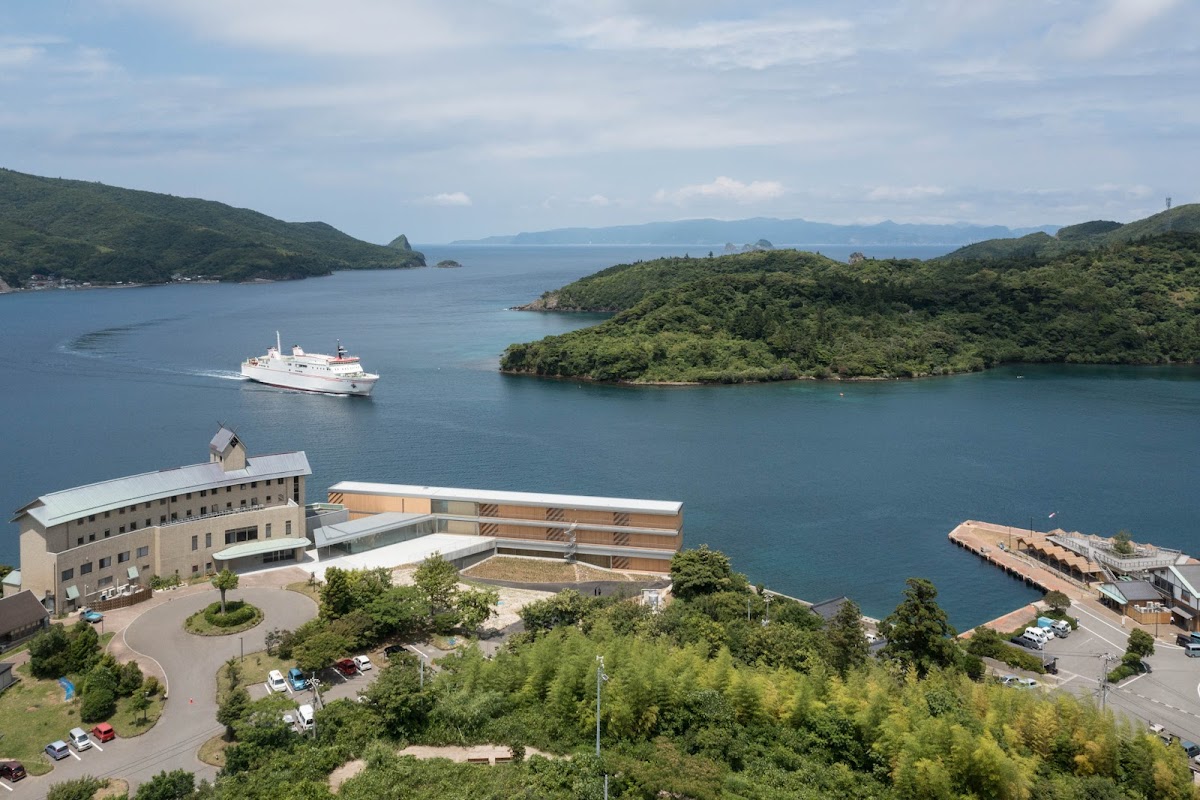
Ento (Shimane - Oki Islands)
Eighteen minimalist rooms on the rim of an ancient caldera island with floor-to-ceiling ocean views. The architecture is deliberately restrained: concrete, glass, and wood in their simplest forms, allowing the extraordinary geological landscape, a 6-million-year-old volcanic caldera now filled by the sea, to be the sole focus. The remoteness is part of the design.
Hyakuna Garan (Okinawa)
Clifftop Okinawan hotel with a private beach cave pool and Ryukyu limestone architecture. The design draws from Okinawa's geological formations, using the local stone as both structural material and aesthetic statement. The cave pool, naturally carved into the cliff face, is one of the most remarkable architectural-natural features at any hotel in Japan.
Ace Hotel Kyoto
Kengo Kuma's renovation of a 1926 telephone office celebrates modern Japanese craft in a city context. While not a nature hotel in the traditional sense, the integration of Japanese materials, washi paper, indigo-dyed textiles, and live-edge wood, creates an environment that connects urban hospitality to natural craftsmanship.
The Rural Art Networks
Beyond individual properties, Japan's rural art festival movement has created entire landscapes where art and nature merge:
- Echigo-Tsumari Art Field (Niigata): Satoyama Jujo and Ryugon sit within this art-scattered landscape of rice paddies and mountains. Outdoor installations by internationally recognized artists are distributed across 200 sites.
- Naoshima and the Seto Inland Sea islands (Kagawa): Benesse House is the center of an art ecosystem spanning three islands with museums, installations, and artist residencies.
- Obuse (Nagano): Tsuruya Ryokan is in the art-rich town that houses the Hokusai Museum and chestnut-grove galleries, connecting traditional Japanese art to its agricultural landscape.
Frequently Asked Questions
Benesse House (Naoshima), Satoyama Jujo (Niigata), Shiroiya Hotel (Gunma), and Ento (Oki Islands) represent the finest intersection of art, architecture, and natural setting in Japan.
Yes. Benesse House is both museum and hotel. The Museum building lets you sleep among artworks at night. The Oval has six hilltop rooms accessible by monorail. Park and Beach buildings offer additional options with Tadao Ando architecture.
For more nature accommodation, see our nature retreat guide, countryside accommodation guide, and off-the-beaten-path hotels. Browse all properties on our interactive map.