Japan's landscape is staggeringly varied. Within a single country, you can move from subarctic birch forests to subtropical mangrove coasts, from snow-buried mountain valleys to volcanic island shorelines. The best nature hotels in Japan understand this and place you directly inside these landscapes, not beside them.
This guide covers 15 properties we consider the finest nature-immersed hotels across Japan. Each one earns its place not just for comfort or design, but for the quality of its relationship with the land around it. We've organized them by region, from north to south, to help you plan around your itinerary.
Hokkaido: Japan's Wild Frontier
Hokkaido feels like a different country. The northernmost main island has more in common with Scandinavia than with Tokyo, with vast forests, volcanic lakes, and winter snowfall measured in meters. Nature hotels here offer true wilderness immersion.
1. Zaborin (Niseko, Hokkaido)
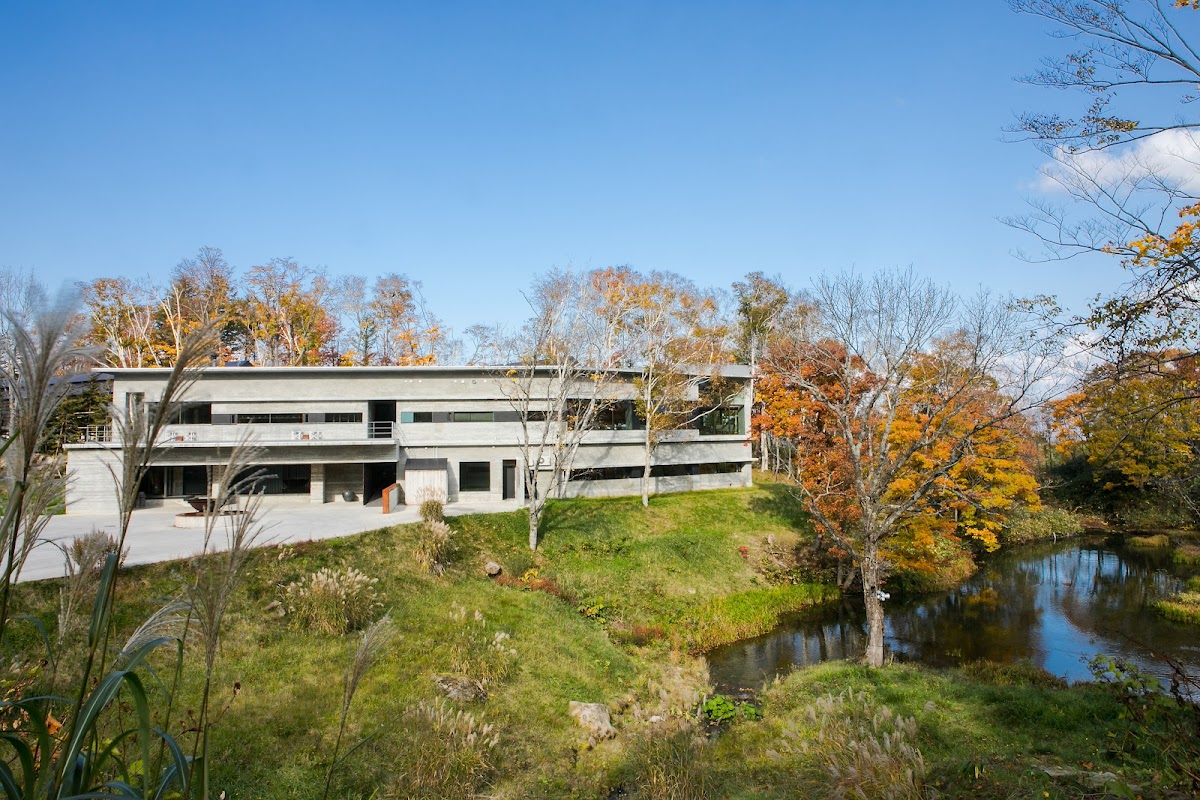
Widely regarded as one of Japan's finest ryokan, Zaborin sits in a birch forest near Niseko with views of Mt. Yotei. Every room has two private onsen baths, one indoor and one outdoor, fed by natural hot springs. The architecture by Nakayama Architects is a masterclass in bringing the forest inside. Winter stays with deep powder snow outside and steaming onsen water are unforgettable.
2. The Little Onsen Cabins (Niseko, Hokkaido)
Two hand-built forest cabins with private stone onsen baths crafted entirely from local Hokkaido materials. There is no reception desk, no restaurant, no lobby. Just you, the forest, and a natural hot spring flowing into your private stone bath. The handcrafted quality here sets it apart from anything mass-produced.
3. NUPPUKOTTE (Akan-Mashu, Hokkaido)
A forest glamping retreat inside Akan-Mashu National Park, surrounded by primeval woodland that has been growing undisturbed for centuries. The name comes from the Ainu language, connecting guests to the indigenous culture of Hokkaido. Wildlife sightings, including deer and red-crowned cranes, are common.
Tohoku and Snow Country
Northern Honshu is snow country, the Japan of Kawabata's Nobel Prize-winning novel. Deep winters, hot springs steaming in the cold air, and a pace of life that feels centuries removed from Tokyo.
4. Tsurunoyu Onsen (Akita)
A 350-year-old hot spring inn deep in the mountains of Akita, famous for its milky white outdoor bath surrounded by forest. The thatched-roof buildings, oil lamp lighting, and irori hearth cooking create an atmosphere that has barely changed since the Edo period. In winter, snow piles high on the rooftops and the outdoor bath becomes one of the most photographed scenes in Japan.
5. Lamp no Yado (Ishikawa)
Accessible only by boat or a narrow coastal path, this is Japan's most remote accommodation. Perched on a rocky cliff above the Sea of Japan, the inn is lit entirely by oil lamps after dark. The isolation is total: no roads, no convenience stores, just the sea, the cliffs, and the sound of waves. A nature hotel in the most literal sense.
6. Satoyama Jujo (Niigata)
A renovated farmhouse in Niigata's rice country that has become a destination in itself. The design balances rustic heritage with contemporary comfort, and the surrounding satoyama landscape of terraced rice paddies, forests, and streams represents the traditional Japanese relationship between people and nature. Winter brings meters of snow and a stunning white landscape.
Kanto and Chubu Highlands
The mountainous interior within reach of Tokyo holds some of Japan's most accessible nature hotels. The Japanese Alps, Yatsugatake range, and highland plateaus offer forest immersion without long travel times.
7. SANU 2nd Home - Karuizawa (Nagano)
Architect-designed carbon-neutral cabins set in Karuizawa's famous birch forests, just one hour from Tokyo by Shinkansen. Floor-to-ceiling windows dissolve the boundary between interior and forest. The cabins feature high-speed Wi-Fi and wood-burning stoves, making them equally suited for weekend escapes and extended workation stays.
8. Shishi-Iwa House (Karuizawa, Nagano)
Designed by Pritzker Prize-winning architect Shigeru Ban, this boutique hotel blurs architecture and nature with its curved wooden structure that wraps around the forest. Every room opens onto gardens designed by landscape architect Mirei Shigemori's grandson. It is a rare example of a building that genuinely improves its natural setting.
9. Gosenjaku Hotel Kamikochi (Nagano)
Located in the heart of the Kamikochi alpine valley, surrounded by the 3,000-meter peaks of the Northern Alps. Kamikochi is car-free, adding to the sense of wilderness. The Azusa River runs crystal-clear past the hotel, and hiking trails lead into some of Japan's most spectacular mountain scenery. Open only from April to November when the mountain road is passable.
Kansai and Kumano
Beyond Kyoto's temples, the Kansai region holds deep forests, ancient pilgrimage trails, and some of Japan's most spiritually charged landscapes.
10. Kiri-no-Sato Takahara (Wakayama)
Perched on a ridge along the ancient Kumano Kodo pilgrimage trail, this mountain guesthouse offers sea-of-clouds morning views that rank among the most extraordinary in Japan. The surrounding Kumano forests are UNESCO World Heritage listed. Walking the ancient trail from the inn connects you to a thousand years of pilgrimage history.
11. ARCANA IZU (Shizuoka)
A riverside forest retreat in the Izu Peninsula where the sound of the Kano River accompanies every moment. The restaurant serves French-Japanese cuisine that has earned recognition for its use of local mountain and ocean ingredients. Every room faces the forested river gorge, and private open-air baths let you soak while listening to the current below.
Western Japan and the Islands
Japan's western reaches and island chains offer a different palette of nature: the Inland Sea's calm waters, Shikoku's hidden valleys, and the subtropical forests of the southern islands.
12. Beniya Mukayu (Ishikawa)
A luxury ryokan in the hot spring town of Yamashiro that has been welcoming guests for over a century. The property combines traditional Japanese aesthetics with a commitment to sustainability that earned it Green Globe certification. Each room has a private open-air bath, and the kaiseki cuisine showcases the bounty of Ishikawa's mountains and Sea of Japan coast.
13. Chiiori (Tokushima)
A 300-year-old thatched-roof farmhouse restored by American author Alex Kerr, sitting high on a mountainside in one of Japan's three great secluded valleys. The Iya Valley is the kind of place that makes you question whether you've traveled to a different century. There is no air conditioning, no television, and the nearest town is a winding mountain drive away. That is entirely the point.
14. Sankara Hotel & Spa Yakushima (Kagoshima)
A luxury resort on Yakushima, the UNESCO-listed island famous for ancient cedar forests that inspired Studio Ghibli's Princess Mononoke. The hotel provides a refined base for exploring the island's primordial landscape, with guided treks to the Jomon Sugi, a cedar tree over 2,000 years old. The contrast between the wild forest and the hotel's polished comfort is part of the appeal.
15. Treeful Treehouse (Okinawa)
A treehouse accommodation suspended in the subtropical forest of northern Okinawa. Sleeping among the canopy of a Yanbaru forest gives a perspective on Japan's southernmost nature that no ground-level hotel can match. The area is home to endemic species found nowhere else on earth, including the Okinawa rail and Yanbaru long-armed scarab beetle.
How to Choose the Right Nature Hotel
With such variety, choosing comes down to what kind of nature experience you want:
- Hot springs and traditional culture: Zaborin, Tsurunoyu, and Beniya Mukayu combine onsen bathing with ryokan hospitality.
- Mountain and forest immersion: SANU Karuizawa, Gosenjaku Kamikochi, and NUPPUKOTTE put you deep in the woods.
- Remote and off-grid: Lamp no Yado, Chiiori, and The Little Onsen Cabins offer true disconnection.
- Design and architecture: Shishi-Iwa House, ARCANA IZU, and Satoyama Jujo marry thoughtful design with natural settings.
- Easy access from Tokyo: Karuizawa properties (1 hour), Hakone (1.5 hours), and Izu (2 hours) are ideal for short trips.
Booking tip: Premium ryokan like Zaborin and Gora Kadan should be reserved 3-6 months ahead for peak seasons. Modern cabin stays like SANU can often be booked with shorter lead times. Winter (December-February) and autumn foliage (October-November) are the busiest periods.
Frequently Asked Questions
Nature hotels in Japan are accommodation properties deliberately sited in natural settings such as forests, mountains, hot spring valleys, and coastal areas. They range from luxury ryokan with private onsen to architect-designed cabins and eco-lodges, all sharing a focus on connecting guests with the surrounding landscape.
Each season offers distinct appeal. Spring (March-May) brings cherry blossoms and fresh greenery. Summer (June-August) is ideal for highland retreats and forest stays. Autumn (October-November) delivers spectacular foliage. Winter (December-February) is perfect for snow-covered onsen ryokan and ski-area lodges.
Budget eco-lodges and mountain huts start around $80-120 per night. Mid-range nature hotels and modern cabins range from $150-350. Premium ryokan and luxury nature retreats with meals included typically cost $400-800+ per night per person.
Most upscale nature hotels have English-speaking staff or English materials. Smaller, rural properties may have limited English, but hospitality transcends language. Booking through English-friendly platforms or using translation apps helps bridge any gaps.
Yes. Many excellent nature hotels are within 1-3 hours of Tokyo or Osaka. SANU Karuizawa and Shishi-Iwa House are about 1 hour from Tokyo by bullet train. More remote destinations like Hokkaido or Yakushima require domestic flights but offer truly wild landscapes.
Looking for more specific guides? Check out our articles on cabin stays in Japan, ryokan near Tokyo, onsen ryokan, and nature stays near Tokyo. Or browse all properties on our map.