Cherry blossom season transforms Japan. The fleeting pink canopy, lasting barely a week at full bloom, creates an urgency that infuses the entire country with energy. Experiencing sakura from a ryokan, watching petals drift past your window or float on the surface of your onsen bath, elevates the experience from sightseeing to immersion.
The challenge is timing and booking. This guide helps you choose the right region, book the right property, and maximize your chances of catching peak bloom.
Understanding Sakura Timing
The cherry blossom front (sakura zensen) moves north from Okinawa in January to Hokkaido in May. For most visitors targeting the iconic Somei Yoshino variety:
Late March - Early April: Kyushu, Shikoku, Kansai (Kyoto/Osaka), Tokyo, Hakone. This is the most popular and competitive booking period.
Mid April: Northern Kanto, Niigata, southern Tohoku. Less crowded, often equally beautiful.
Late April - Early May: Northern Tohoku (Akita, Aomori), Hokkaido. Significantly less crowded, combined with spring mountain scenery.
Hedging your timing: Mountain areas bloom later than lowlands at the same latitude. A Hakone ryokan at elevation may bloom a week after Tokyo. This gives you a natural "safety margin" if you arrive after city blossoms have peaked.
Best Cherry Blossom Ryokan by Region
Kyoto: Cultural Depth
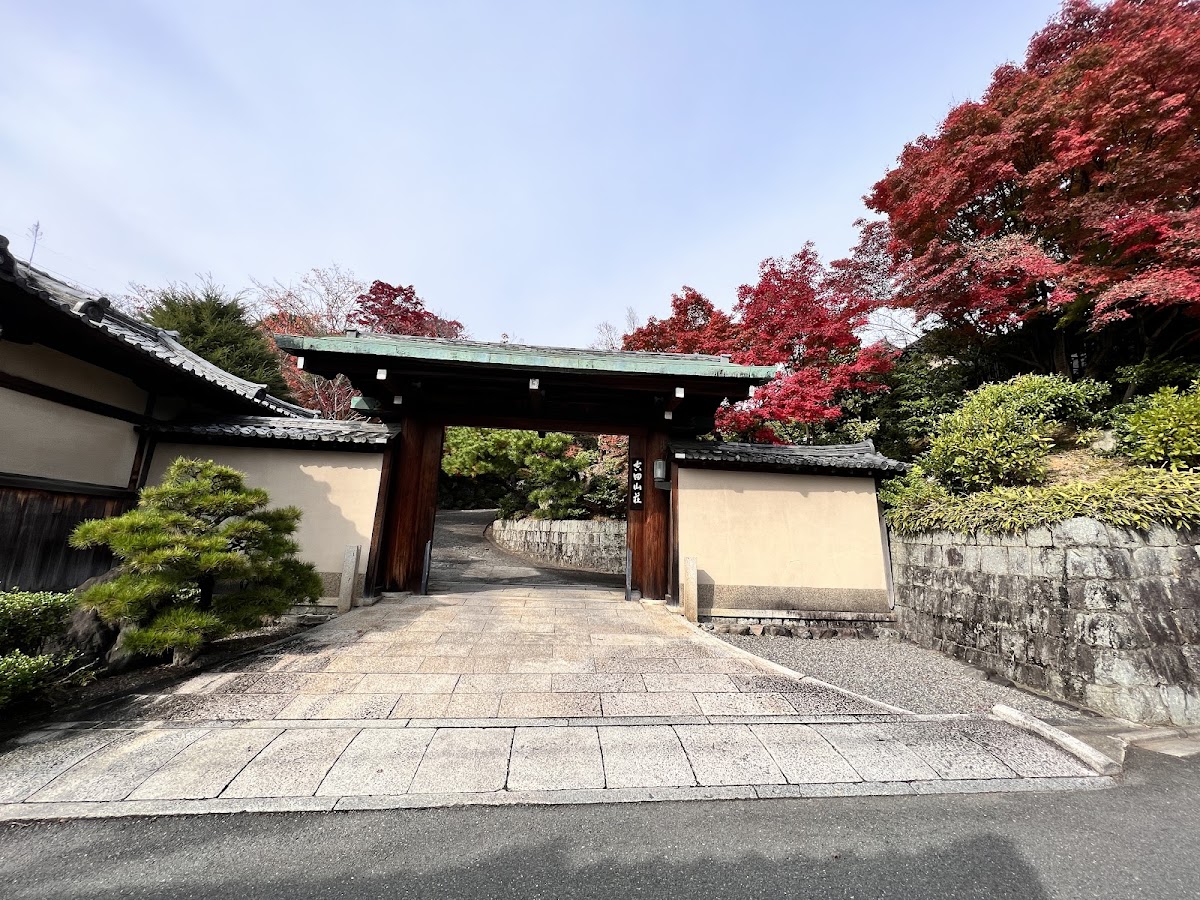
A former prince's estate on the forested slopes of Mt. Yoshida, surrounded by cherry and maple trees. During sakura, the property's garden transforms into a private cherry blossom viewing spot, away from Kyoto's crowded public parks. The mountain location means slightly later blooming than central Kyoto, and the intimate scale (just a handful of rooms) ensures exclusivity. The ryokan's forested setting provides a natural canopy of pink and white.
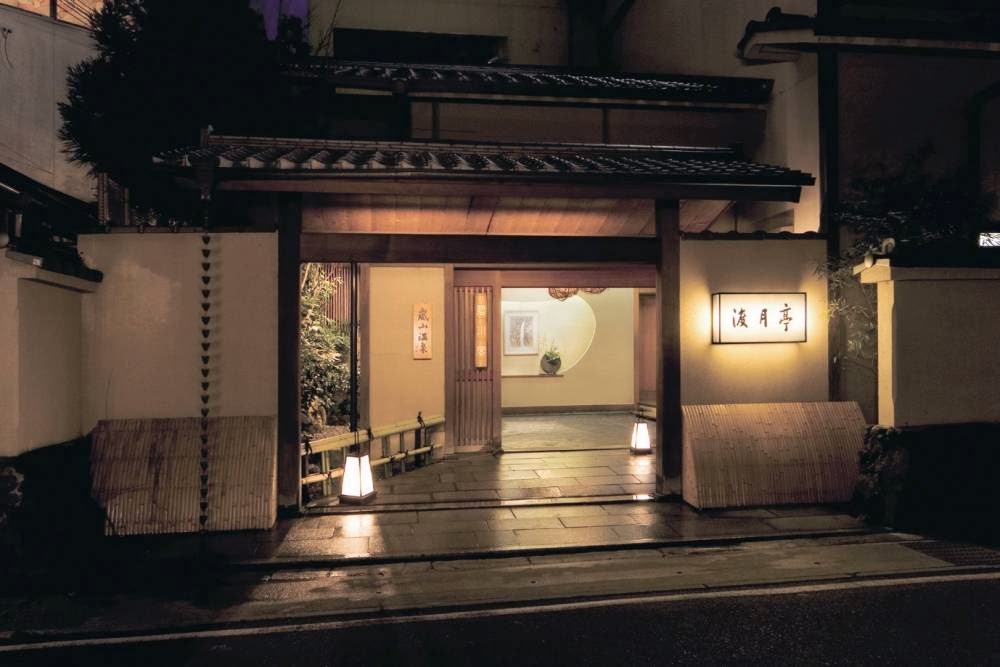
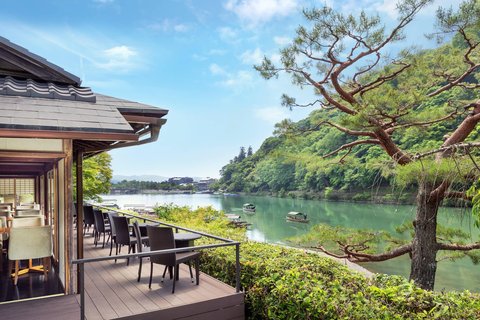
Overlooking the Oi River and Arashiyama mountains from a position that captures the full sweep of Kyoto's western hills during cherry blossom season. The view from the onsen bath includes the famous Togetsukyo bridge, the river, and mountains covered in spring pink. Arashiyama's cherry blossoms are less frantic than central Kyoto spots like Maruyama Park, and the elevated ryokan position means you watch the scene from above rather than within the crowds.
A luxury hotel on the banks of the Hozu River in Arashiyama, with cherry trees lining the riverbank directly below. The riverfront rooms frame cherry blossoms at eye level, and the hotel's garden has its own cherry trees for semi-private viewing. The Arashiyama bamboo grove and Tenryuji Temple are walking distance, both spectacular in spring. The hotel's modern comfort combines with the traditional Arashiyama setting during sakura.
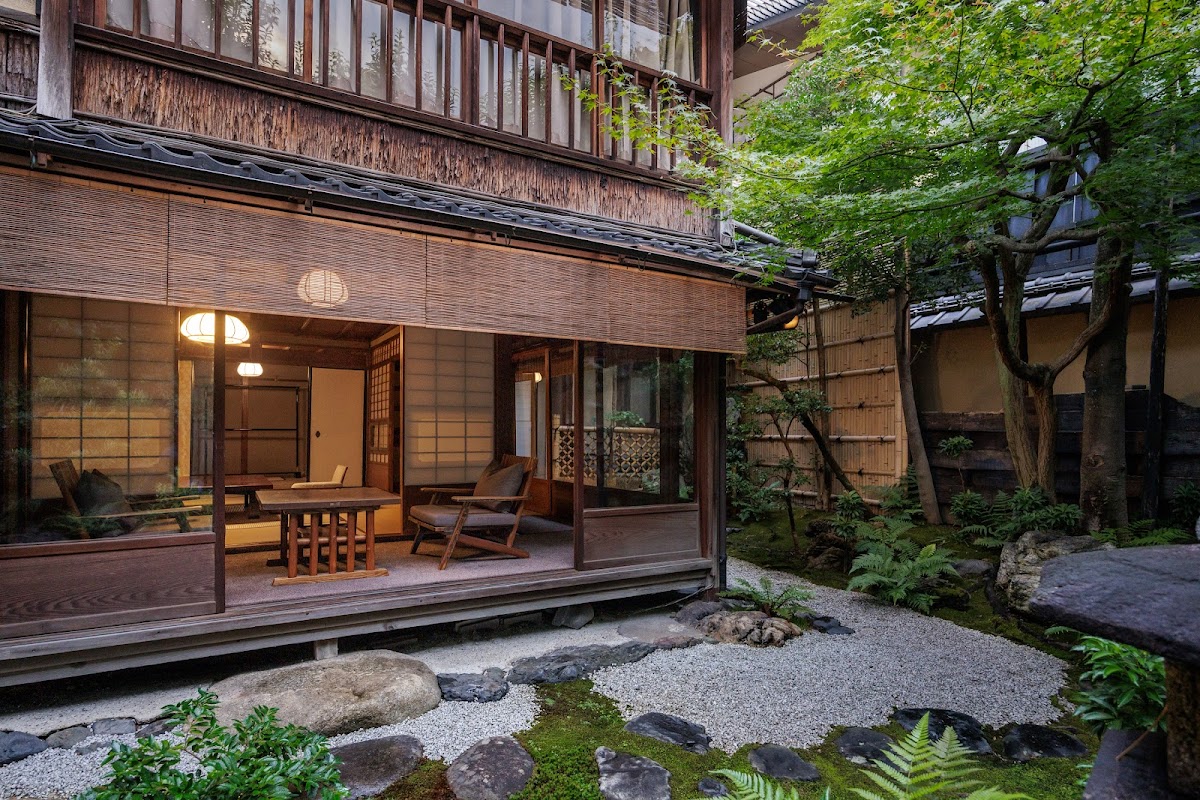
One of Kyoto's most celebrated traditional ryokan, in the central Nakagyo district. While the property's Japanese garden is intimate rather than expansive, staying at Hiiragiya during sakura means experiencing cherry blossom season from an authentically Kyoto base. The ryokan's staff can guide you to lesser-known viewing spots: the Philosopher's Path at dawn, Ninnaji's late-blooming Omuro cherries, and the Imperial Palace grounds. The kaiseki incorporates spring ingredients.
Yoshino, Nara: 30,000 Cherry Trees
Yoshino is Japan's most famous cherry blossom destination, with approximately 30,000 cherry trees planted on the mountainside in four zones (Shimo Senbon, Naka Senbon, Kami Senbon, and Oku Senbon) that bloom sequentially from bottom to top over several weeks. This means the viewing window is longer than anywhere else in Japan.
A mountain ryokan in the heart of Yoshino's cherry blossom zone. Staying here during bloom means waking to a mountainside covered in pink and white. The sequential blooming pattern (lower mountain to upper, spanning 2-3 weeks) gives you flexibility that single-day visitors don't have. Morning walks through the mountain paths before crowds arrive from Osaka and Nara are transcendent. The ryokan's forest setting means cherry trees are part of your immediate landscape.
Tohoku: Late Bloom, Fewer Crowds
Named after cherry blossoms (wabi-zakura), this ryokan in Kakunodate is purpose-built for the sakura experience. Kakunodate's samurai district is lined with weeping cherry trees (shidarezakura) that create a dramatic tunnel of cascading pink. Blooming in late April to early May, weeks after Kyoto, this is the intelligent choice for travelers who missed or want to avoid the central Japan rush. The onsen and fine dining enhance what is already one of Japan's most beautiful cherry blossom scenes.
A mountain onsen ryokan in Yamagata where spring arrives late and cherry blossoms coincide with the last of the mountain snow. The contrast of pink blossoms against remaining snow patches is uniquely Tohoku. The village atmosphere is quiet and genuine, with locals celebrating hanami alongside the few visitors who find their way here. The kaiseki features wild mountain vegetables (sansai) that emerge simultaneously with the cherry blossoms.
Cherry Blossom Onsen Experiences
Bathing in an outdoor onsen while cherry blossoms flutter down into the water is one of Japan's most poetic experiences. Several properties specifically position their baths for spring viewing:
Ryokan in Hakone's Gora and Miyanoshita areas have planted cherry trees around their outdoor baths. The bloom here is typically early to mid-April, a week or so after central Tokyo. Properties like Mikawaya Ryokan and Gora Kadan offer bath-side sakura viewing.
In Tohoku, Kakunodate's onsen properties and the Nyuto area transition from snow onsen to cherry blossom onsen within a few weeks. Visiting in late April can catch both experiences in a single trip.
Practical Planning Guide
Booking Strategy
For Kyoto and Hakone: Book 4-6 months ahead. Luxury properties (Tawaraya, Hiiragiya, Gora Kadan) sell out for peak sakura weekends up to a year in advance. For Yoshino: Book 3-4 months ahead; the longer bloom window means more availability. For Tohoku: 2-3 months is usually sufficient; demand is lower despite the beautiful scenery.
Flexibility
Exact bloom timing is unpredictable until 1-2 weeks before. Book flexible rates where possible. A "missed" bloom often means catching early blossoms (also beautiful) or the petal-scattering phase (hanafubuki), when wind sends blossoms swirling like pink snowflakes. Every stage of the bloom has its own beauty.
Avoiding Crowds
Weekdays are dramatically less crowded than weekends. Early morning (before 8am) at popular spots offers near-solitude. Tohoku and mountain areas offer spectacular blooms with a fraction of Kyoto's crowds. Nighttime illuminated cherry blossoms (yozakura) at temples and parks add an extra dimension to evening ryokan stays.
What Else Blooms
Cherry blossoms aren't alone in spring. Plum blossoms (ume) precede sakura by 2-4 weeks. Wisteria follows in late April to May. Azaleas bloom April through June. A spring ryokan stay often includes multiple flowering species beyond cherry blossoms.
Related Guides
- Autumn Foliage Onsen — the other great seasonal onsen experience
- Couples Onsen Ryokan — romantic sakura season stays
- When to Book a Ryokan — timing guide for all seasons
- Nature Stays in Kyoto — full Kyoto accommodation guide
- Nature Stays in Akita — Tohoku sakura destinations