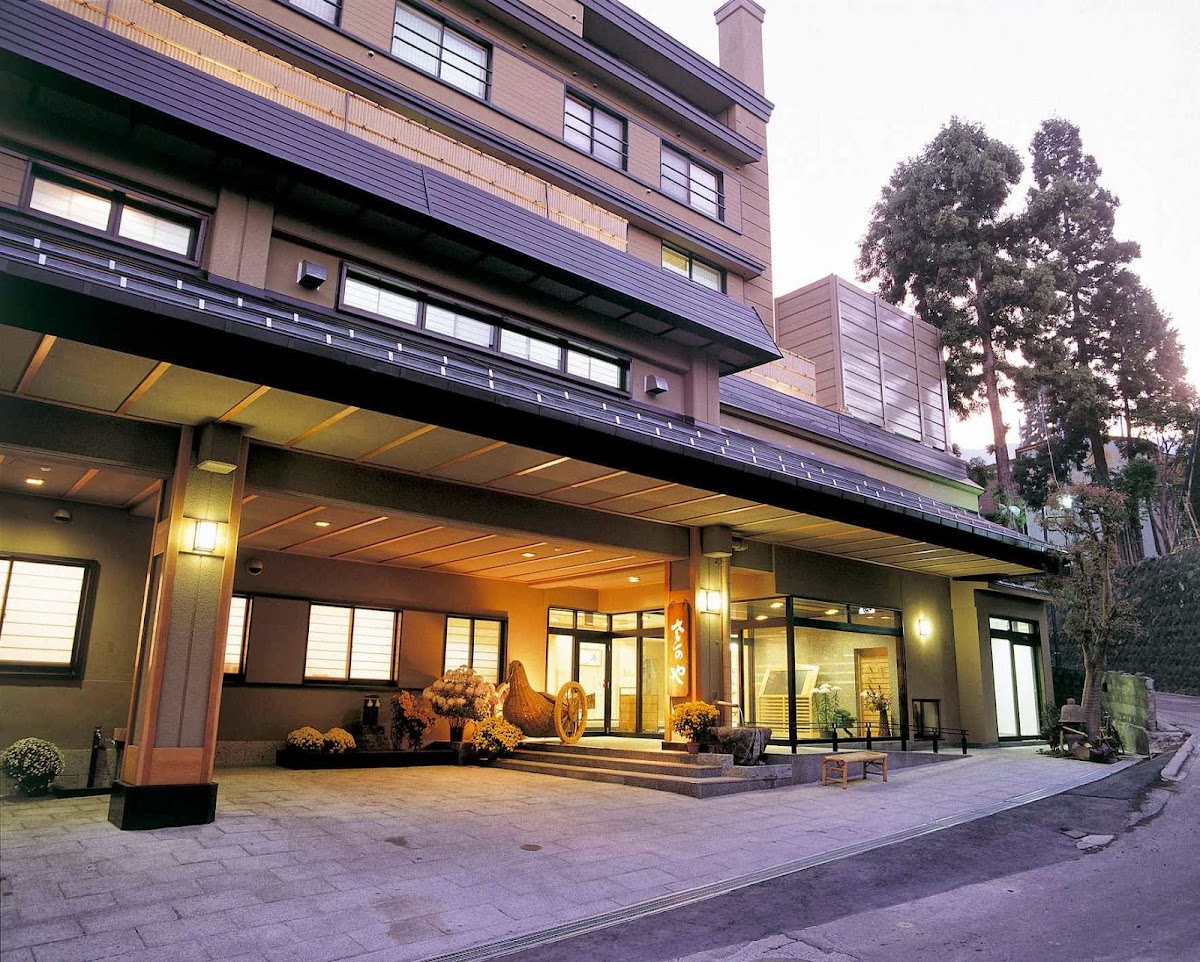
An onsen town is not a resort. It is a community built around water. The best onsen towns in Japan developed over centuries where hot spring water emerges naturally, and their character, their architecture, their cuisine, their entire way of life, is shaped by the presence of thermal water. Visiting an onsen town means entering a place where bathing is not an amenity but a social institution, where guests walk the streets in yukata and wooden geta sandals, hopping between public baths and pausing at steaming foot baths along the way.
These fifteen onsen towns represent the finest hot spring communities in Japan, selected for the quality of their waters, the preservation of their traditional streetscapes, the range of bathing options, and the overall experience of being there.
1. Kinosaki Onsen - The Perfect Onsen Town, Hyogo
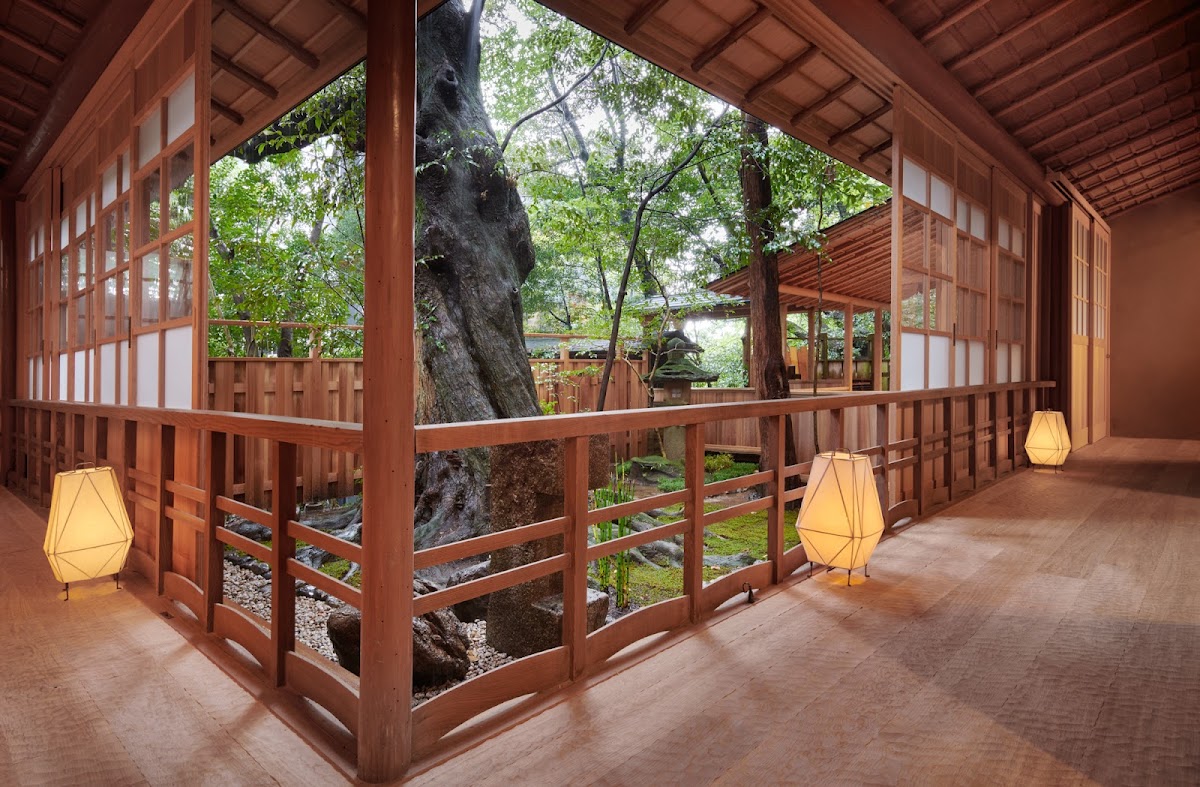
A refined ryokan with private onsen baths in the heart of Kinosaki. The ideal base for exploring all seven public bathhouses, with yukata and wooden geta provided for the evening stroll along the willow-lined canal.
Kinosaki consistently ranks as Japan's best onsen town, and deservedly so. Seven public bathhouses are connected by a willow-lined canal, each with different architecture, water properties, and atmosphere. Every ryokan in town provides yukata and a pass to all seven baths. The evening ritual of strolling between bathhouses in your robe, steam rising in the lantern light, crab croquettes in hand, is one of Japan's great travel experiences.
The water here is sodium chloride spring, excellent for skin and circulation. Each bathhouse has indoor and outdoor sections. Locals have their favorites and will debate them passionately. The snow crab season (November-March) transforms the town's cuisine.
Getting there: Limited Express Kinosaki from Kyoto (2.5h) or Osaka (2.5h). Direct access, no transfers needed.
Cost: Bathhouse pass (included with ryokan stay) covers all 7 baths. Individual entry ¥800 each.
Stay: Yumeya for luxury, Nishimuraya Shogetsutei for modern design, Nishimuraya Annex Shogetsu for classic elegance.
2. Kurokawa Onsen - Forest Rotenburo, Kumamoto
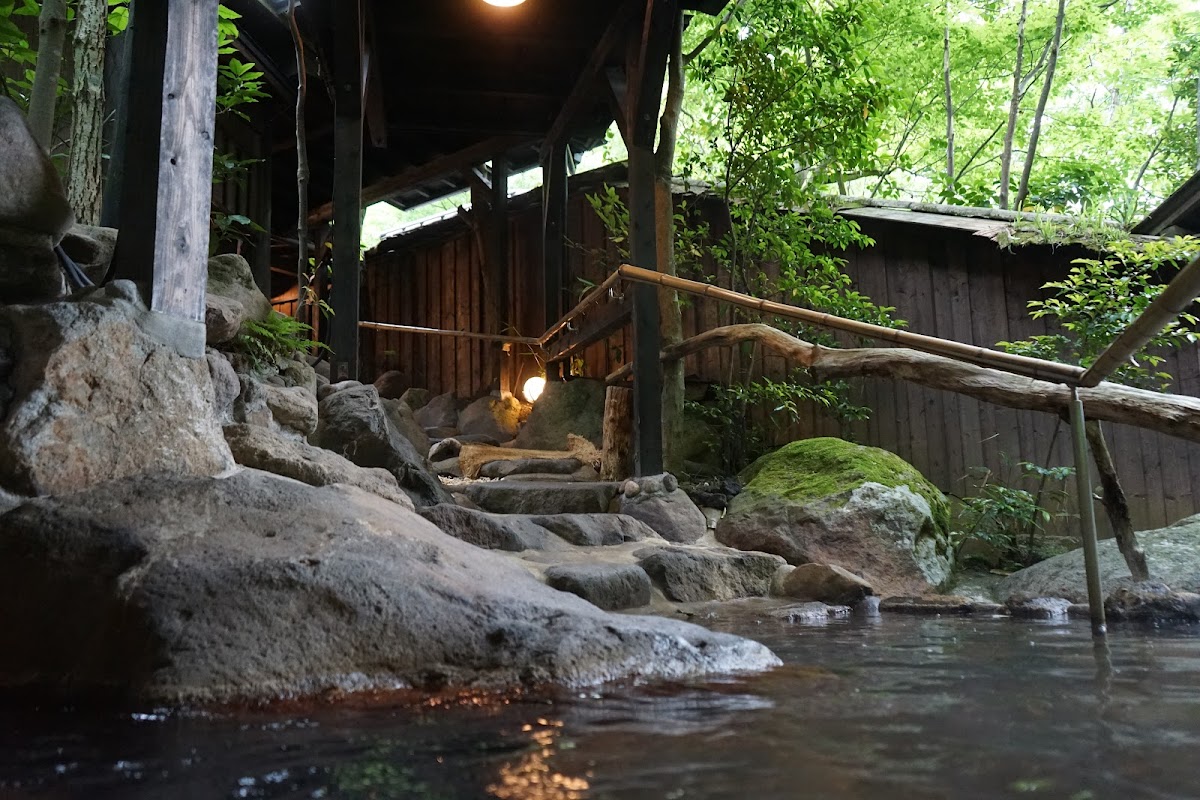
Intimate ryokan with private open-air onsen nestled in Kurokawa's forest gorge. The rotenburo (outdoor bath) here is surrounded by trees and river sounds, exemplifying what makes Kurokawa special: nature as the primary bathing companion.
Kurokawa Onsen is built in a forested gorge in Kumamoto's highlands, and the town's genius lies in how it uses the ravine landscape. Each ryokan has its own rotenburo (outdoor bath), many carved directly into the riverside rock. The town's "nyuto tegata" pass allows you to visit three different ryokan baths of your choice, each offering different water properties, temperatures, and forest views.
Unlike Kinosaki's urban compactness, Kurokawa's appeal is its wild forest setting. Walking between ryokan means crossing wooden bridges over the river, following paths through bamboo groves, and encountering steam vents in unexpected places. The water sources are varied: sulfate springs, chloride springs, and milky sulfur springs all emerge within this small area.
Getting there: Fly to Kumamoto Airport, then 2h by car/bus. Also accessible from Oita (Beppu/Yufuin).
Cost: Nyuto tegata pass ¥1,300 for 3 ryokan baths.
Stay: Oyado Nonohana, Oyado Noshiyu, or Yamamizuki.
3. Ginzan Onsen - Taisho Romance, Yamagata
A Taisho-era ryokan on Ginzan's famous riverside street, renovated by architect Kengo Kuma. The interior blends century-old wooden beams with contemporary design. The address places you directly in one of Japan's most photographed streetscapes.
Ginzan Onsen is Japan's most photogenic onsen town. A single street of three-story wooden ryokan faces each other across a narrow river, with gas lamps providing the only evening illumination. The town was a silver mining settlement (ginzan means "silver mountain"), and the architecture dates to the Taisho era (1912-1926), creating a frozen-in-time atmosphere unique in Japan.
In winter, when snow blankets the wooden balconies and steam from the river mingles with falling flakes, the scene is almost impossibly beautiful. The water is sodium chloride and sulfate, excellent for skin conditions. Note that the town is small and books out months in advance for winter weekends.
Getting there: Shinkansen to Oishida Station (3.5h from Tokyo), then 40 min by bus.
Cost: Public bath entry ¥500. Ryokan stays from ¥25,000 per person (2 meals).
Best season: Winter (January-February) is magical but books up 3-4 months ahead.
4. Yamashiro Onsen - Artisan Culture, Ishikawa
An 800-year-old ryokan where artist Rosanjin once lived, maintaining 18 generations of Kaga hospitality. The property connects to Yamashiro's deep artisan traditions: Kutani porcelain, lacquerware, and the town's 1,300-year bathing history.
Yamashiro Onsen has been a bathing destination for 1,300 years, but what elevates it beyond other ancient onsen towns is the depth of its artisan culture. This is the birthplace of Kutani-ware ceramics and Yamanaka lacquerware, and the ryokan here serve meals on locally crafted dishes. The town's two public bathhouses, Soyu and Kosoyu, are architectural landmarks: Soyu is a faithful Meiji-era reconstruction, Kosoyu a modernist interpretation.
Getting there: Hokuriku Shinkansen to Kagaonsen Station, then 10 min by bus or taxi.
Stay: Araya Totoan for history, Beniya Mukayu for zen minimalism.
5. Bessho Onsen - Oldest Hot Springs, Nagano
A refined ryokan in one of Japan's oldest onsen towns. The Shinshu-inspired kaiseki uses mountain vegetables, local soba, and sake from neighboring breweries. The town's 1,400-year bathing heritage is palpable in its three public bathhouses.
Bessho Onsen claims to be Japan's oldest hot spring, with origins traced to the 7th century. The town retains a genuinely local character: the three public bathhouses (Oyu, Ishiyu, Daishiyu) serve residents as much as visitors, and the temple district above the town holds National Treasure buildings. The alkaline simple spring water is silky and excellent for skin.
Getting there: Hokuriku Shinkansen to Ueda (1.5h from Tokyo), then the charming Bessho Line (30 min).
Cost: Public baths ¥200-300 each.
6. Nozawa Onsen - Ski Village Hot Springs, Nagano
A traditional ryokan at the heart of Nozawa Onsen village, steps from the famous Ogama communal cooking spring and multiple soto-yu (free public baths). Private rooms with views of the village rooftops and mountains beyond.
Nozawa Onsen is unique among Japan's onsen towns because it doubles as a ski resort. The village has 13 free public bathhouses (soto-yu), maintained communally by residents through a centuries-old tradition. The Ogama, a communal hot spring basin where locals cook vegetables and eggs, is the social center of town. In winter, combine exceptional powder skiing with evening onsen hopping.
Getting there: Hokuriku Shinkansen to Iiyama Station (2h from Tokyo), then 25 min by bus.
Cost: All 13 public baths are free. Donations welcome.
Best season: Winter for skiing + onsen; summer for hiking + onsen.
7. Beppu - Onsen Capital, Oita
Modern ryokan with private onsen baths overlooking Beppu Bay. A sophisticated base for exploring Japan's onsen capital, where more hot spring water flows than any other city on Earth.
Beppu is not a quaint onsen village. It is a city powered by hot water. The second-largest volume of hot spring water on Earth (after Yellowstone) feeds over 2,000 individual springs across eight distinct onsen districts. The variety is unmatched: clear sodium springs, milky blue sulfur springs, iron-red springs, mud baths, sand baths, steam baths. The "Hells" (jigoku) are geothermal spectacles where water boils at the surface in vivid colors.
Getting there: Fly to Oita Airport (1.5h from Tokyo), then 45 min shuttle. Or Shinkansen to Kokura + Sonic limited express (1h).
Stay: Hana Beppu, Sanso Kannawaen in the atmospheric Kannawa district, or Amane Resort Seikai for ocean-view bathing.
8. Yufuin - Art Village Hot Springs, Oita
Private open-air onsen villas overlooking Mt. Yufu. Each detached room has its own rotenburo fed by natural hot springs, with views of the mountain that defines this town's skyline.
Yufuin sits in a basin beneath the twin peaks of Mt. Yufu, and the town has cultivated an identity as Japan's "art village onsen." Small galleries, craft shops, and cafes line the main street, and morning mist rising from Lake Kinrinko creates one of Japan's most atmospheric landscapes. The onsen water is simple alkaline, gentle enough for sensitive skin.
Getting there: JR Yufuin no Mori scenic train from Hakata (Fukuoka) in 2.5h. Also 1h by car from Beppu.
Stay: Yufuin Baien, Yufuin Sankouen, or Sansou Murata.
9. Hakone - Tokyo's Onsen Gateway, Kanagawa
Former imperial villa turned luxury ryokan in the heart of Hakone. Multi-course kaiseki, open-air onsen, and mountain views within 90 minutes of Tokyo.
Hakone is Japan's most visited onsen area, and for good reason: 17 distinct hot spring sources, Mt. Fuji views, world-class art museums, and easy access from Tokyo. The town sprawls across a volcanic caldera with distinct neighborhoods, from the valley floor of Hakone-Yumoto to the highland of Gora and the lakeside of Togendai. Each area has different water properties.
Getting there: 90 min from Tokyo (Shinkansen to Odawara + Hakone-Tozan Railway, or direct Romancecar from Shinjuku).
Stay: Gora Kadan, Gora Hanaougi, Yoshimatsu, or Fufu Hakone.
See also: Our 3-day Hakone itinerary and best ryokan in Hakone guide.
10. Shuzenji Onsen - Literary Hot Springs, Shizuoka
Japan's most revered ryokan, with 530+ years of history. Noh stage on a pond, masterful kaiseki, and the essence of traditional Japanese hospitality in an onsen town that has inspired writers for centuries.
Shuzenji is the Izu Peninsula's most atmospheric onsen town. A bamboo-lined path follows the Katsura River past temples and public baths. The town's literary connections run deep: Nobel laureate Yasunari Kawabata and modernist Natsume Soseki both wrote here. The spring water is simple alkaline, drawn from the same source that Kobo Daishi reportedly discovered 1,200 years ago.
Getting there: Shinkansen to Mishima (1h from Tokyo), then Izu-Hakone Railway to Shuzenji (35 min).
Stay: Asaba for the ultimate, Arai Ryokan for art-filled tradition, Yagyu no Sho for refined quietude.
11. Dogo Onsen - Oldest Bathhouse, Ehime
A refined ryokan with Japanese garden and private baths, steps from the famous Dogo Onsen Honkan. The oldest documented hot spring in Japan, cited in the Kojiki (712 AD).
Dogo Onsen claims the title of Japan's oldest hot spring, mentioned in the Kojiki, Japan's first written history. The iconic Honkan bathhouse (1894) inspired the bathhouse in Miyazaki's Spirited Away. After a lengthy restoration, it stands as one of Japan's most important architectural landmarks. The town's arcade and streetcar add to its distinct Shikoku charm.
Getting there: Fly to Matsuyama Airport (1.5h from Tokyo), then streetcar to Dogo Onsen terminal.
Cost: Honkan entry from ¥700.
12. Atami - Seaside Onsen Revival, Shizuoka
All-suite luxury with private onsen and forest views in revitalized Atami. Fine dining kaiseki using Suruga Bay seafood. Part of Atami's remarkable revival as a modern onsen destination.
Atami spent decades in decline after its 1960s heyday, but has undergone one of Japan's most dramatic urban revivals. New boutique hotels, craft coffee shops, and revitalized ryokan now coexist with the retro shotengai (shopping arcades). The combination of onsen water, ocean views, and proximity to Tokyo (35 min by Shinkansen) makes Atami arguably Japan's most accessible onsen town.
Getting there: 35 min from Tokyo Station by Shinkansen. Possibly Japan's most accessible onsen town.
Stay: Fufu Atami, Atami Kaihoro, or Atami Sekaie.
13. Nyuto Onsen - Mountain Wilderness, Akita
Nyuto Onsen sits at the base of Mt. Nyuto in the Tohoku highlands, a collection of eight rustic ryokan scattered across a mountain valley. Each has its own spring source with distinctly different water: milky white sulfur at Tsurunoyu, clear sodium at Magoroku, black mineral-rich water at Kuroyu. The landscape is primal: beech forest, mountain streams, and in winter, meters of snow. This is onsen at its most raw and authentic.
Getting there: Shinkansen to Tazawako (3h from Tokyo), then 30 min by bus.
Cost: Onsen hopping pass ¥1,800 for all 8 ryokan baths.
14. Awara Onsen - Sea of Japan Cuisine, Fukui
Luxurious ryokan with private onsen overlooking rice paddies. The cuisine here is defined by Echizen crab (November-March) and the extraordinary seafood of the Sea of Japan coast.
Awara Onsen is the onsen town you visit for food. Situated near the Sea of Japan coast in Fukui, it sits at the intersection of some of Japan's finest ingredients: Echizen crab, sweet shrimp, yellowtail, and rice from the surrounding paddies. The sodium chloride spring water is excellent for the skin, and the town's relatively low profile means you avoid the crowds of more famous destinations.
Getting there: Hokuriku Shinkansen to Awara Onsen Station (now direct from Tokyo, ~3h).
Stay: Hana Tsurube Bettei Masuya or Wisterian Life Club Awara.
15. Noboribetsu - Volcanic Valley, Hokkaido
All-suite luxury hotel with private onsen in every room. The crown jewel of Noboribetsu's accommodation, with 9 different spring types available on-site, mirroring the extraordinary geothermal diversity of the valley.
Noboribetsu's Jigokudani (Hell Valley) is a volcanic crater where steam vents, boiling pools, and sulfurous fumaroles create a landscape that looks genuinely otherworldly. The town has the widest variety of spring types of any single onsen area in Japan: sulfur, iron, salt, radium, and more. Walking through Hell Valley and then soaking in water that emerged from this volcanic chaos is a powerful geological experience.
Getting there: 1h by bus from New Chitose Airport, or 1.5h from Sapporo by JR + bus.
Stay: Bourou Noguchi Noboribetsu for luxury with private onsen in every room.
Planning Your Onsen Town Visit
- For first-timers: Kinosaki Onsen offers the most complete, accessible onsen town experience.
- For nature: Kurokawa Onsen and Nyuto Onsen place you in wild, forested settings.
- For food: Awara Onsen (Echizen crab) and Kinosaki (Tajima crab) are seafood paradises.
- For photography: Ginzan Onsen in winter is unmatched.
- For easy access from Tokyo: Atami (35 min) and Hakone (90 min) are closest.
- For winter: Nozawa Onsen combines skiing and soaking.
Frequently Asked Questions
Kinosaki Onsen is often considered Japan's best onsen town for its seven connected public bathhouses, walkable layout, and yukata strolling culture. Kurokawa Onsen in Kumamoto and Ginzan Onsen in Yamagata are also exceptional.
An onsen town (onsen-gai) is a Japanese village built around natural hot spring sources, with multiple bathhouses, ryokan, and walking paths centered on communal bathing culture.
Yes. Nearly all onsen towns welcome international visitors. Towns like Kinosaki and Kurokawa are especially foreigner-friendly with English signage and guest services.
For more hot spring guides, see our hidden onsen of Japan, onsen ryokan guide, onsen etiquette guide, and best ryokan with private onsen.