Quick Answer
Japan's best hiking accommodation includes mountain lodges in the Japanese Alps (Hakuba, Kamikochi), trail-side ryokan along the Kumano Kodo, and wilderness hotels in Daisetsuzan National Park. The unique advantage of hiking in Japan is the abundance of onsen hot springs near trail networks—soaking in a mineral-rich bath after a mountain day is a quintessential Japanese hiking experience. Peak season runs July-October for alpine routes.
Japan is a mountain country. Over 70% of the land is mountainous terrain, including the 3,000-meter peaks of the Japanese Alps, the volcanic ranges of Hokkaido, the ancient forests of Yakushima, and the sacred pilgrimage routes of the Kumano Kodo. Yet unlike mountain destinations in many countries, Japanese hiking almost always leads back to a hot bath, a multi-course dinner, and a comfortable bed. The infrastructure connecting trail to accommodation is extraordinary.
This guide covers the best hiking regions in Japan and the accommodation options at each—from basic mountain huts to luxury base camp ryokan, and everything in between.
The Japanese Alps: Japan's Premier Hiking Destination
The Japanese Alps span three ranges—Kita (Northern), Minami (Southern), and Chuo (Central)—across Nagano, Gifu, Toyama, and Yamanashi prefectures. Peaks exceed 3,000 meters, alpine ridgelines offer multi-day traverse routes, and the accommodation infrastructure is the best in the country for mountain hiking.
Hakuba Valley (Nagano)
Hakuba is Japan's premier mountain sports base, with trail access to the Hakuba peaks (Shirouma, Goryu, Kashimayari) and the stunning Happo-One ridgeline. The town itself sits at 700 meters with the Northern Alps rising dramatically behind it.
Perfectly positioned for hiking the Happo-One trail and the Northern Alps ridgeline routes. The property has its own onsen fed by the Happo hot spring, making the post-hike soak immediate and effortless. Rated 4.7 stars, it combines mountain lodge practicality with ryokan-level hospitality. The restaurant sources from local mountain farmers, and the views of the Hakuba peaks from the bath are among the best in the Alps.
Rated 4.8 stars—one of the highest-rated mountain properties in Japan. The lodge is ideally located for accessing Hakuba's hiking trail network and provides comfortable base camp accommodation. The surrounding area offers routes from gentle valley walks to challenging alpine ascents, making it suitable for all fitness levels. Summer and autumn are prime seasons for hiking from this base.
A 4.7-star ryokan in the Hakuba area combining tatami-room accommodation with natural hot spring bathing. The traditional format provides a culturally rich base for mountain hiking—you experience the Japanese Alps both on the trail and in the ryokan. The onsen is particularly welcome after long days on the Northern Alps routes.
Kamikochi (Nagano/Gifu)
Kamikochi is the gateway to Japan's most famous alpine scenery: the Azusa River valley at 1,500 meters, framed by the peaks of Hotaka and Yarigatake. Private vehicles are banned, giving the valley an atmosphere of pristine mountain wilderness.
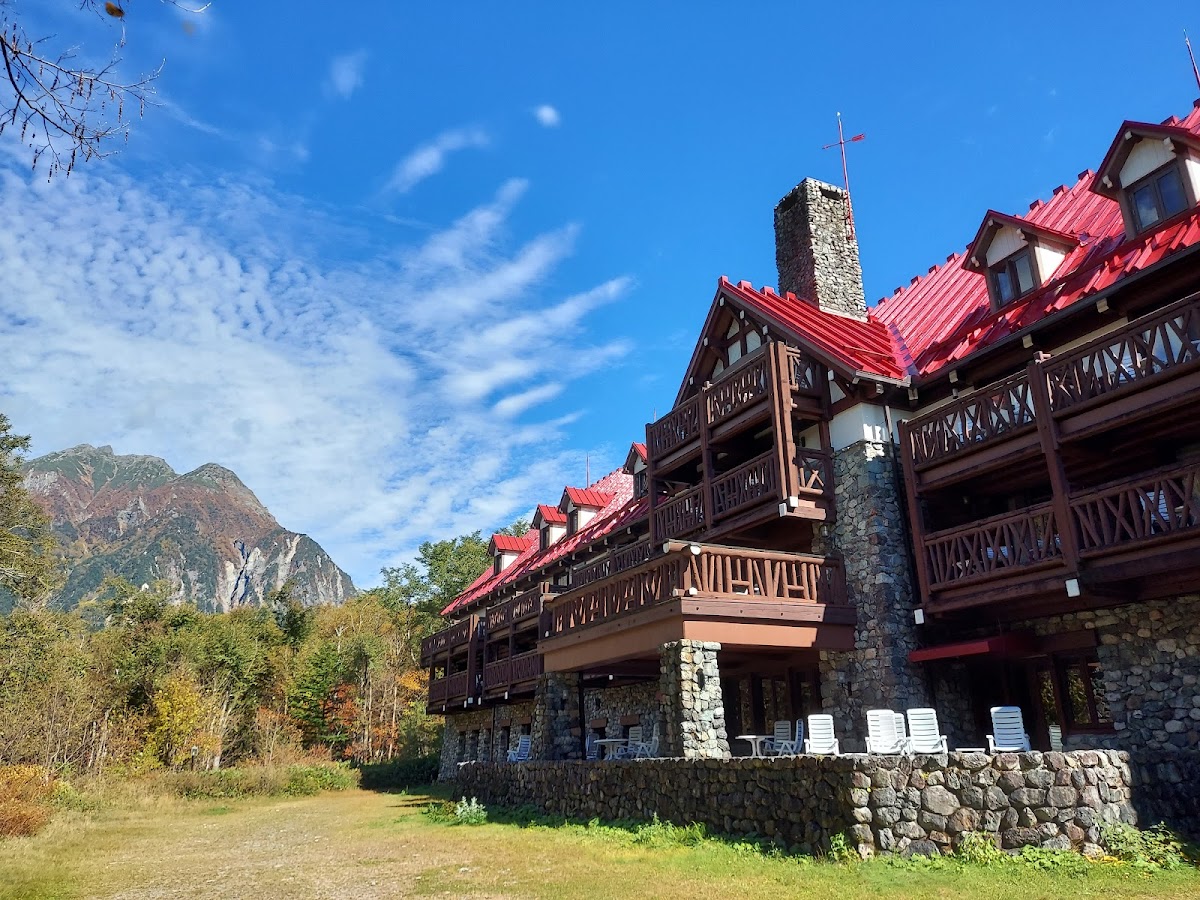
The most prestigious mountain hotel in Japan, operating since 1933 in the heart of Kamikochi. The red-roofed log building is an icon of Japanese mountain culture. While the hotel itself is a comfortable base rather than a hiker's hut, it provides a luxurious launching point for day hikes along the Azusa River and more ambitious multi-day routes toward Yarigatake and the Hotaka ridgeline. Open May through November.
Karuizawa and Tateshina (Nagano)
For hikers who prefer gentler terrain, the highland areas around Karuizawa and Tateshina offer forest walks, volcanic landscapes, and excellent accommodation at lower elevations.
A French-Japanese auberge set in the forests of Karuizawa, ideal for combining gentle nature walks with exceptional dining. The surrounding area has well-maintained forest trails, Mt. Asama volcano approaches, and the Usui Pass historic trail. Not for alpine purists, but perfect for hikers who appreciate fine food and forest settings in equal measure.
In the Tateshina highlands at the southern end of the Yatsugatake range, this hotel provides access to volcanic plateau hiking and forest walks. The Yatsugatake range offers excellent mid-level mountain hiking with less crowds than the Northern Alps. The hotel's highland setting means you start your hike at elevation, with access to alpine meadows and volcanic landscapes.
Kumano Kodo: Pilgrimage Trail Accommodation
The Kumano Kodo is a network of ancient pilgrimage trails through the mountains of the Kii Peninsula, recognized as a UNESCO World Heritage Site. The trails pass through old-growth forest, mountain passes, and small villages where pilgrims have rested for over a thousand years. The accommodation along the route is some of the most atmospheric in Japan.
A secluded ryokan in the sacred Kumano region with outdoor baths overlooking mountain forests that have been pilgrimage sites for a millennium. The Kumano Kodo trail passes nearby, making this an ideal base or mid-trail rest stop. The combination of forest hiking, spiritual landscape, and onsen bathing is quintessentially Kumano.
On a small island in Katsuura Bay, accessible by boat, this ryokan offers dramatic coastal hot spring baths that are the perfect reward after completing Kumano Kodo trail sections. The coastal terminus of the pilgrimage route is nearby, and soaking in the ocean-view onsen after days on the mountain trail is one of Japan's great hiking-onsen combinations. Private onsen baths available.
Daisetsuzan: Hokkaido's Mountain Wilderness
Daisetsuzan National Park in central Hokkaido is Japan's largest national park, a vast volcanic landscape of peaks, plateaus, hot springs, and alpine meadows. The Grand Traverse—a multi-day hut-to-hut route across the range—is considered Japan's greatest long-distance mountain walk.
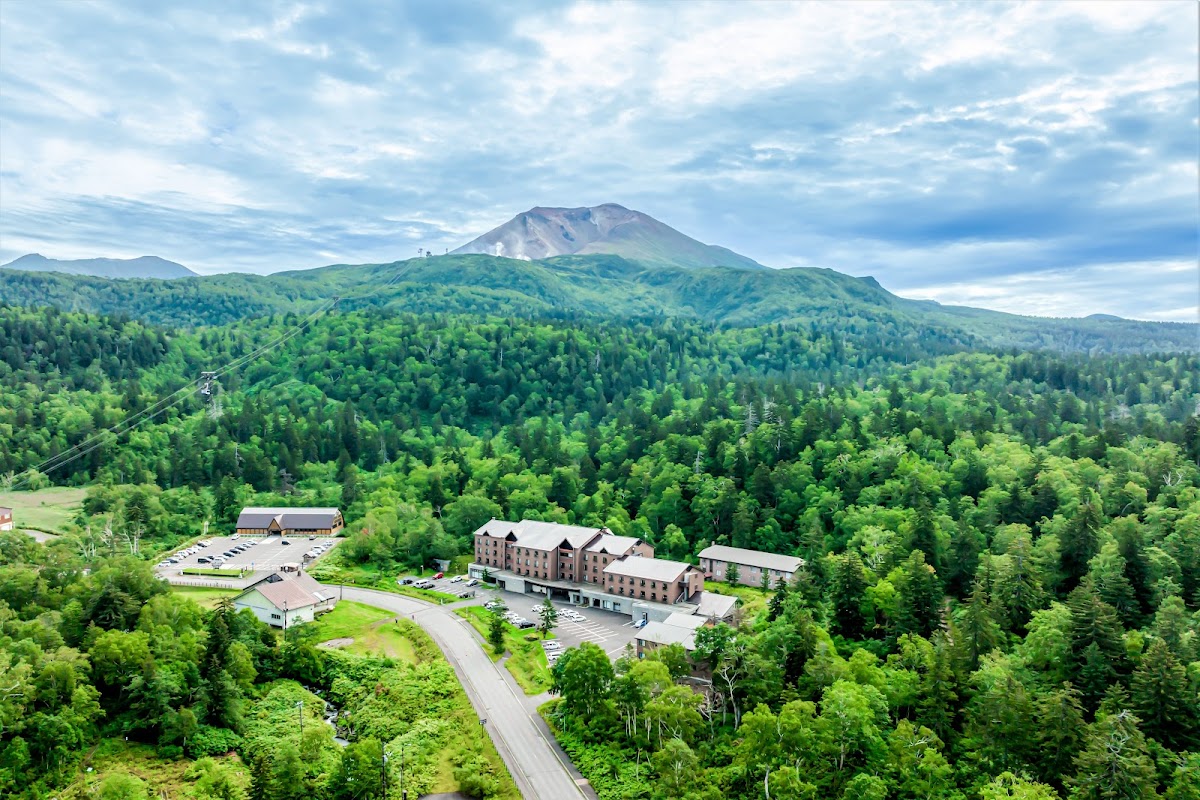
At the base of Asahidake, Hokkaido's highest peak (2,291m), this hotel provides the most convenient base for Daisetsuzan hiking. A ropeway lifts you to 1,600 meters, from where day hikes and the Grand Traverse begin. The hotel's onsen uses water from the volcanic hot springs that emerge throughout the mountain. The alpine flower season (late June-July) transforms the plateau into a carpet of color.
Tohoku Mountains: Wilderness and Solitude
The mountains of northern Honshu offer wilder, less-visited hiking with exceptional autumn foliage and deep forest settings. The Hakkoda range, Shirakami mountains, and Zao massif are standout destinations.
In the Hakkoda Mountains of Aomori, this hotel serves as base camp for hiking one of Tohoku's most scenic volcanic ranges. The Hakkoda traverse offers beech forest walking, volcanic crater lakes, and mountain marshlands. Autumn foliage here peaks in early October and is among the most vivid in Japan. The hotel's hot spring baths draw from the mountain's volcanic waters.
A simpler mountain lodge option in the Hakkoda range, closer to the trailheads and suited to hikers who prioritize trail access over luxury. The surrounding beech and birch forests are pristine, and the mountain hot springs are among the most remote and atmospheric in Tohoku.
On the Miyagi side of Mt. Zao, this resort combines forest immersion with access to the Zao hiking trail network. The Zao range is famous for its crater lake (Okama), alpine meadows, and in winter, the "snow monsters" (juhyo) ice formations. The property's forest setting and onsen baths make it an excellent base for exploring this volcanic landscape year-round.
Hakone and Nikko: Mountain Hiking Near Tokyo
For hikers based in Tokyo, Hakone and Nikko offer excellent mountain terrain within 1.5-2 hours of the capital, combined with some of Japan's best onsen accommodation.
On the historic Tokaido highway's mountain pass, this ryokan sits at the intersection of Japan's most famous historic walking route and Hakone's mountain trail network. The Old Tokaido stone-paved road through cedar forest is one of Japan's great day hikes, and the surrounding Hakone mountains offer additional routes to volcanic vents, crater lakes, and ridgeline views of Mt. Fuji.
A luxury forest hotel in the Nikko mountains with access to some of the best hiking near Tokyo. Trails lead to waterfalls (Kegon Falls, Ryuzu Falls), Lake Chuzenji, the volcanic plateau of Senjogahara, and the peaks of Mt. Nantai and Mt. Nyoho. The property's forest immersion setting and onsen baths make the return from the trail as rewarding as the hike itself. Rated 4.7 stars.
Practical Tips for Hiking in Japan
- Book mountain huts early. Popular routes fill up weeks in advance during peak season (late July-August). Many huts now accept online reservations.
- Carry cash. Mountain huts and some trail-side facilities are cash-only. ¥10,000 notes can be difficult to change at altitude.
- Bring a towel for onsen. Many mountain huts and trail-side ryokan have hot spring baths but may not provide towels. A small quick-dry towel serves double duty on the trail and in the bath.
- Check trail conditions. Mountain trails in Japan can be affected by typhoons, snowpack, and volcanic activity. Prefecture-level mountain information centers post current conditions online.
- Register your hiking plan. Submit a tozan todoke (climbing registration form) at trailheads for alpine routes. This is a safety requirement, not a permit—it is free and helps rescue teams locate hikers in emergencies.
- Respect mountain hut culture. Quiet hours start early (usually 8-9 PM). Meals are communal and at set times. Remove boots at the entrance. Pack out all garbage.
Seasonal Hiking Calendar
Spring (April-June)
Lower-elevation trails open as snow melts. Kumano Kodo and Shikoku trails are at their best. Mountain wildflowers bloom progressively upslope. Late June opens the alpine season in the Japanese Alps as snow retreats above 2,500 meters.
Summer (July-August)
Peak alpine season. The Japanese Alps and Daisetsuzan offer the full range of high-mountain hiking. Alpine flowers carpet the meadows in July. Afternoon thunderstorms are common above 2,000 meters—start early. Mt. Fuji climbing season runs July-September.
Autumn (September-November)
The most beautiful season for mountain hiking. Foliage sweeps down from the peaks: Daisetsuzan in mid-September, Tohoku in early October, the Japanese Alps in mid-October, Hakone and Nikko in late October-November. Cooler temperatures, stable weather, and fewer crowds make this the ideal season for experienced hikers.
Winter (December-March)
Alpine routes close under snow. Lower-elevation trails in Kumano, Hakone, and Shikoku remain accessible. Snow-shoe hiking is popular in Tohoku and Hokkaido. Winter mountain climbing is for experienced mountaineers only—avalanche risk is real and rescue resources are limited.
Frequently Asked Questions
The Japanese Alps (Hakuba, Kamikochi) for alpine terrain, Kumano Kodo for forest pilgrimage trails, Daisetsuzan in Hokkaido for wilderness, and Tohoku mountains for solitude and foliage. Hakuba and Kamikochi are the premier Alps bases.
Mountain huts (yamagoya) on alpine trails, onsen ryokan at trail bases, mountain hotels at scenic locations, and base camp towns with varied lodging. Many hikers plan routes around post-hike onsen stops at properties like Shirakabaso in Hakuba.
July-August for alpine routes, September-November for autumn foliage hiking, April-June for lower-elevation trails. The Kumano Kodo is accessible year-round. Daisetsuzan in Hokkaido peaks July-September.
This is one of Japan's great advantages. Most hiking areas have nearby onsen. Oyado The Earth on the Kumano Kodo, Fufu Nikko, and Hakuba Happo Onsen Shirakabaso all combine excellent trails with hot spring bathing.
Yes, especially in peak season (late July-August) and on weekends. Reservations are now standard at most huts. Popular routes fill weeks in advance. Book through hut websites or by phone.
For more nature stays, see our cabin stays guide and forest hotels in Japan. Planning an onsen trip after your hike? Read our onsen ryokan guide and onsen near Tokyo. Or browse all properties on our map.